How To Design An Engagement Ring Without Ruining The Surprise

First Things First

You Do Not Need To Know What You’re Doing

Most people designing an engagement ring have never bought jewellery before

So if you currently feel slightly out of your depth, that’s fairly normal

The majority of bespoke engagement rings start with:
• a rough budget
• a few screenshots
• maybe a vague idea of style
• and a lot of “I’m not really sure what I’m looking for”

That’s enough to begin

Part of my job is helping narrow things down and make the process feel manageable rather than overwhelming

Keeping The Whole Thing Secret

This is usually much easier than people expect

Most engagement rings are designed quietly through:
• messages
• emails
• short calls
• or one relaxed meeting

You do not need to disappear for mysterious full-day appointments every weekend

A lot of the process happens gradually in the background while normal life carries on

Book a consultation

I’m also very aware that people are often trying not to get caught

So communication can stay fairly discreet and low-pressure throughout (feel free to mute our WhatsApp chat)

How To Figure Out What They’ll Actually Like

Most people already have more clues than they realise

The easiest place to start is simply paying attention to what they already wear

Things like:
yellow gold or silver
• minimal or detailed
• delicate or substantial
• vintage feeling or modern
• polished or slightly worn-in

usually tell you far more than random trend articles online

If they wear the same ring every day, that’s probably a better reference point than Instagram

You can also quietly look at:
• Pinterest boards
• saved Instagram posts
• jewellery brands they already follow
• hints from friends or siblings

You are not trying to read their mind perfectly

You are just trying to build a clear direction

Ring Size Without Making It Obvious

This is the part people panic about most

Realistically, there are a few ways around it

You can:
• borrow an existing ring briefly
• ask a friend or family member carefully
• trace a ring on paper
• compare against your own fingers
• or estimate and resize afterwards

Resizing engagement rings later is extremely common

People massively overthink this part

What The Process Usually Looks Like

Most bespoke engagement rings follow a fairly simple process:

1. Initial Conversation

We talk through:
• budget
• style
• stones
• practical wearability
• general direction

Nothing formal or intimidating

2. Stone Sourcing & Design Direction

Once I understand the overall feel of the ring, I’ll source suitable stones and begin narrowing down design options

Usually this becomes much clearer surprisingly quickly

3. Design Refinement

This is where proportions, settings, band shape, texture and small details get adjusted

A lot of the important decisions here are actually about:
• comfort
• durability
• balance
• and how the ring feels to wear long term

not just how it photographs

4. Making The Ring

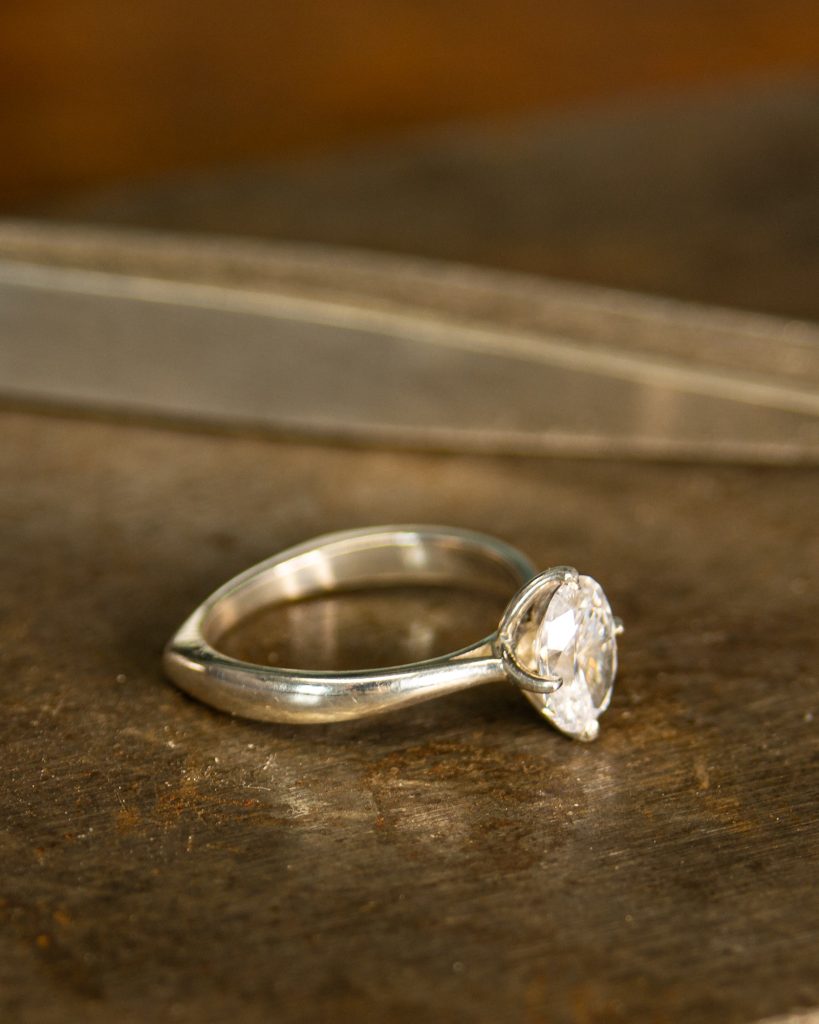
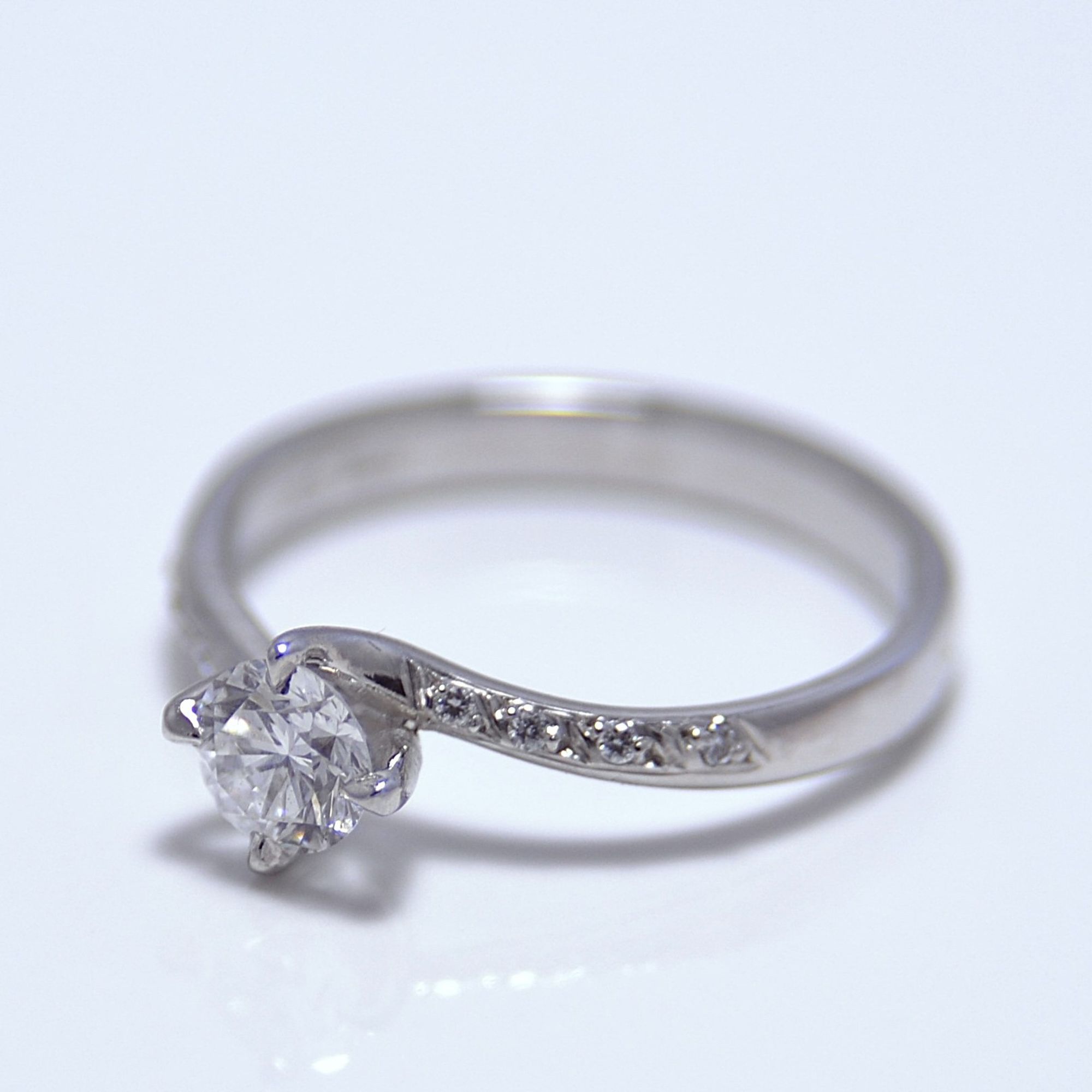
Once everything is approved, the ring gets made and finished by hand

This is usually the calmest part of the whole process

You’ve already done the hard bit by deciding to ask someone to marry you

The Important Thing People Forget

The proposal matters far more than tiny technical details

Years later, nobody remembers whether a claw was fractionally thicker than another one

They remember:
• how nervous you were
• where it happened
• what was said
• and how it felt opening the box

That’s the real memory

The ring simply becomes part of it afterwards

Final Thought

Most people come into this process worried they’ll get something wrong

In reality, engagement rings are rarely about perfection

Book a consultation

They’re usually about paying attention properly to somebody you love

The rest can be figured out together

Can Family Diamonds Be Used In An Engagement Ring?

Using family diamonds in an engagement ring allows you to create something deeply personal while preserving an important part of your family’s history.

A new diamond.
A new design.
A new story.

Working with inherited stones feels different from the beginning.

Sometimes clients arrive at the workshop in Wiltshire with a single ring that has been worn for decades. Sometimes it is a small collection of jewellery that has sat unworn for years but still feels too important to part with.

The stone survives.
The design changes around it.

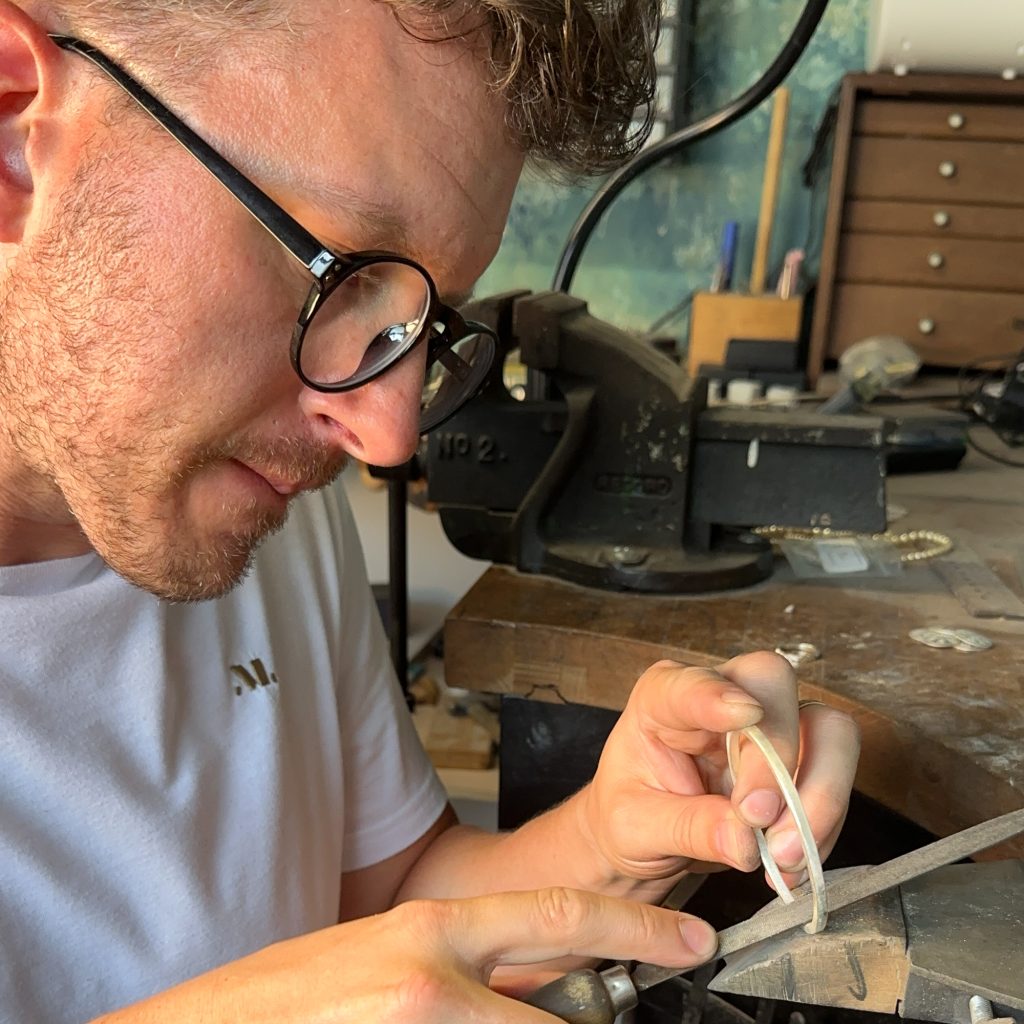
I’m Tom McDanielson, founder and maker behind The Middle Green, where I design and make bespoke engagement rings and heirloom remodelling projects using both newly sourced and inherited diamonds.

Why People Choose To Reuse Family Diamonds

For most people, it is not really about saving money.

It is about continuity.

A diamond that has already existed within a family often feels different to wear than something chosen entirely new. The value becomes layered over time.

You are not just commissioning a ring.
You are carrying something forward.

That can mean:

  • remodelling inherited jewellery into something wearable again
  • combining stones from multiple family rings
  • resetting a diamond from an older engagement ring
  • preserving sentimental stones while creating a completely different design
  • giving jewellery another life rather than leaving it unworn in a box

A lot of bespoke engagement projects are really about preserving meaning rather than simply creating decoration.

A Lot Of These Projects Start With A Conversation

Most heirloom redesigns are less straightforward than people expect.

Often there is uncertainty around what should actually stay.
Sometimes the original ring feels dated but the stone still matters.
Sometimes the jewellery itself carries emotional weight even if it is never realistically going to be worn again.

A lot of consultations end up with inherited jewellery spread across the bench while we work out what should be preserved, what can realistically be reused, and what the next version could become.

Those conversations usually shape the final ring more than trends or reference images do.

Book a consultation

What Can Actually Be Reused?

Usually the diamonds themselves.

Older settings are often heavily worn, thin, damaged, or built in ways that do not suit a modern ring structurally. The stones are normally the most valuable part to preserve.

Commonly reused stones include:

  • old cut diamonds
  • round brilliant diamonds
  • small accent stones
  • heirloom side stones
  • sapphires and coloured stones from inherited jewellery

Older diamonds are often especially interesting because they were cut differently.

Old European cuts and rose cuts tend to feel softer and more irregular than modern stones. They catch light differently. Slight asymmetry and hand-cut proportions often give them far more character.

Perfect can feel strangely lifeless sometimes.

The First Step Is Normally Assessment

Before any design work starts, the stones need checking properly.

I normally look at:

  • chips or damage
  • wear on the girdle
  • previous repair work
  • stone dimensions
  • whether the stones are suitable for daily wear
  • whether they structurally suit the proposed design

Not every inherited stone should automatically go into a new engagement ring.

Sometimes a stone is too worn.
Sometimes proportions make setting difficult.
Sometimes sentimental value outweighs practicality.

Part of the process is being honest about risk before anything is made.

Designing Around Existing Stones

Designing around inherited diamonds is usually more restrictive than designing from scratch.

The stone dimensions already exist.
The proportions already exist.
The design has to respect that.

But those limitations often create stronger work.

Learn more about our bespoke jewellery process

Instead of endlessly browsing options, the project becomes about balance, proportion, texture, and how to make the stone feel at home in a new piece.

The strongest heirloom redesigns usually do not feel forced.

They feel like the stone naturally belonged there all along.

Old Diamonds Work Beautifully In More Organic Settings

One thing I particularly like about older diamonds is that they often suit softer, more organic settings.

Warmer gold tones.
Slightly weathered finishes.
Heavier claw work.
Hand-finished surfaces that still show traces of the making process.

Old stones rarely need ultra-clinical settings to feel special.

In many ways, the imperfections are part of what give them character.

I’ve increasingly found myself drawn toward older diamonds and softer design language in recent years, particularly while developing the next engagement ring pieces for The Middle Green.

What Happens To The Original Jewellery?

That depends entirely on the project.

Some people want the original ring preserved alongside the new piece.
Others are happy for the old ring to be dismantled completely.

Occasionally small details can still be carried across:

  • engraving
  • hidden details
  • tiny accent stones
  • metal melted into a new piece where practical

Although realistically, in many redesign projects, it is the emotional continuity that matters more than physically preserving every element.

The Emotional Side Of The Process

People often underestimate how emotional jewellery becomes.

Especially engagement rings.

Objects absorb memory slowly over time. Jewellery just seems to do it more than most things.

A diamond can outlast generations.
The meaning around it changes repeatedly.

That is part of what makes inherited stones interesting to work with.
You are not creating meaning from nothing.
You are adding another layer to something that already matters.

Frequently Asked Questions

Can old diamonds be reused in a new engagement ring?

Usually, yes.

Most inherited diamonds can be removed from their original setting and reset into a completely new design, assuming the stone is structurally sound.

Can inherited gold also be reused?

Sometimes, but not always directly.

Older gold alloys can behave unpredictably when remelted, so in many cases it is safer to use the inherited gold as material credit toward a new ring rather than physically incorporating it. We prefer to use existing gold for the heavier parts of a design (ie the band rather than the more delicate setting) where it is more structurally sound.

Are old cut diamonds suitable for modern engagement rings?

Absolutely.

Old cut diamonds often work beautifully in contemporary handmade settings, especially designs with softer proportions and more organic finishes.

What if the original ring is damaged?

That is very common.

In most cases the stones themselves are still usable even if the original setting is heavily worn or damaged.

Do I need to know exactly what I want before booking?

Not at all.

Most bespoke engagement projects develop gradually through conversation, sketches, stone assessment, and trying proportions in person.

Considering An Heirloom Redesign?

I regularly work with inherited diamonds and sentimental jewellery from clients across Swindon, Wiltshire, and the wider UK.

Some projects involve subtle redesigns.
Others become entirely new engagement rings built around stones that already carry decades of history.

If you have family jewellery you are considering remodelling, you can explore the bespoke process through the engagement ring and bespoke jewellery sections of the website, or get in touch directly to discuss the project.

What Makes Handmade Jewellery Different

(And Why It Matters)

Most jewellery is designed to look good at a glance

Very little of it is designed to be lived with

That difference starts with how it is made

What “handmade” actually means

The term gets used loosely

In reality, there’s a spectrum

At one end, you have mass-produced pieces
Cast in bulk, polished by machine, finished to be identical

At the other, you have work that is shaped, adjusted, and finished by hand
One piece at a time

This is where handmade jewellery sits

Not perfect
Not identical
But considered at every stage

The process is slower, and that’s the point

A handmade piece passes through fewer hands, but more decisions

Every surface is checked
Edges are refined by eye
Proportions are adjusted in real time

There’s no “good enough” point built into a production line

It’s finished when it feels right

That difference is subtle, but it shows over time
In how the piece wears
In how it holds up
In how it feels when you pick it up, designed to be worn daily

Small imperfections are not flaws

Machine-made jewellery aims for uniformity

Handmade jewellery accepts variation

You might see:

  • Slight differences in surface texture
  • Soft irregularities in shape
  • Marks that come from the making process

These are not mistakes

They are evidence that the piece has been handled, not stamped out

Over time, these details become part of the character of the piece
Rather than something that needs to be hidden

Materials are treated differently

When you’re making one piece at a time, material choice matters more

Recycled metals are selected and worked deliberately
Not just fed into a system

Stone setting is done with care for that specific stone
Not a standardised fitting

The result is a piece that feels solid, balanced, and intentional
Rather than something assembled to a specification

Longevity over trend

Most mass-produced jewellery is designed for turnover

Seasons change
Styles shift
Pieces are replaced

Handmade jewellery tends to move in the opposite direction

It is designed to last
Both physically and emotionally

That means:

  • Simpler forms
  • Stronger construction
  • Less reliance on trends

The goal is not to be worn once

It’s to become part of your routine

Why it matters

Not everyone needs handmade jewellery

If you want something purely decorative, there are plenty of options

But if you want a piece that:

  • holds meaning
  • lasts beyond a season
  • feels like it belongs to you

Then how it is made starts to matter

Because you’re not just choosing how it looks

You’re choosing how it was created, and what it represents

A final note

Handmade doesn’t mean perfect

It means considered

It means slower decisions, fewer shortcuts, and a piece that carries some trace of the person who made it

For some people, that difference is negligible

For others, it’s the whole point

The best alternatives to diamonds when choosing a stone for your wedding or engagement ring

Best Alternative Gemstones for Engagement and Wedding Rings

Diamonds are a classic choice for engagement or wedding rings, but they are far from the only option. Many couples today are drawn to alternative gemstones that offer colour, character, and deeper personal meaning, while still standing up to daily wear.

When choosing a gemstone for a ring you’ll wear every day, durability matters. Stones with higher hardness on the Mohs scale resist scratching and abrasion, helping your ring retain its beauty for decades.

Here’s a practical guide to the best alternative gemstones for engagement and wedding rings, and how to choose the right one for you.

Why Choose Diamond Alternatives for Engagement Rings?

Alternative gemstones allow couples to:

  • Express individuality through colour and distinctive design
  • Select stones with personal or symbolic meaning
  • Create a ring that feels intentional rather than conventional

Many gemstones offer excellent durability, making them well suited to engagement and wedding rings when properly set.

What Makes a Good Engagement Ring Gemstone?

When choosing a gemstone for an engagement or wedding ring, consider three key factors:

1. Durability

For daily wear, gemstones ideally fall above 7.5 on the Mohs hardness scale. These stones resist scratching and maintain polish over time.

Excellent choices include:

  • Sapphire
  • Ruby
  • Tsavorite garnet
  • Spinel
  • Alexandrite

These stones combine beauty with practical longevity.

2. Colour and Visual Character

Alternative gemstones open up a wide spectrum of colour:

  • Deep greens, vivid blues, rich reds, soft pastels, and inky dark tones
  • Subtle or saturated depending on your preference

Your metal choice influences the final look:

  • White gold and platinum complement cooler hues (blue sapphire, spinel, alexandrite)
  • Yellow and rose gold enhance warm tones (ruby, tsavorite, champagne sapphire)

3. Meaning and Symbolism

Many couples choose stones for their associations:

  • Sapphire: loyalty, wisdom, and lasting love
  • Ruby: passion, strength, and devotion
  • Tsavorite: growth, vitality, and prosperity
  • Spinel: renewal and resilience

Meaning can be personal rather than traditional. The most important factor is choosing a stone that resonates with you.

Best Diamond Alternatives for Engagement Rings

Sapphire

One of the most durable gemstones after diamond. Available in blue, green, yellow, pink, peach, and parti-colours. A timeless yet versatile choice.

Ruby

A variety of corundum (like sapphire) with exceptional hardness and a rich red colour. Ideal for those wanting a bold, romantic statement.

Tsavorite Garnet

Vivid green with excellent brilliance and strong durability. A striking alternative to emerald, but far tougher for everyday wear.

Spinel

Often overlooked, spinel comes in blues, greys, reds, pinks, and black. Hard, bright, and well suited to engagement rings.

Salt and Pepper Diamonds

Natural diamonds containing visible inclusions that create a smoky, speckled appearance. They offer the same durability as traditional diamonds, with a more organic, unconventional aesthetic.

Stones Better Suited for Accent Use

Softer gemstones such as quartz varieties (amethyst, citrine, rose quartz), turquoise, or malachite can be beautiful, but are more vulnerable to scratching. These stones work best as:

  • Accent stones
  • Occasional-wear rings
  • Heavily protected bezel or halo settings

For centre stones in engagement rings, higher-hardness gems are the safer choice.

Engagement Ring Design Approaches

When exploring the best alternative stones for engagement rings, consider these design approaches:

  • Single-stone rings: Showcase a sapphire, ruby, spinel, or tsavorite for a clean, timeless look.
  • Gemstone centre with diamond accents: Coloured centre stone with small diamonds for added sparkle and durability.
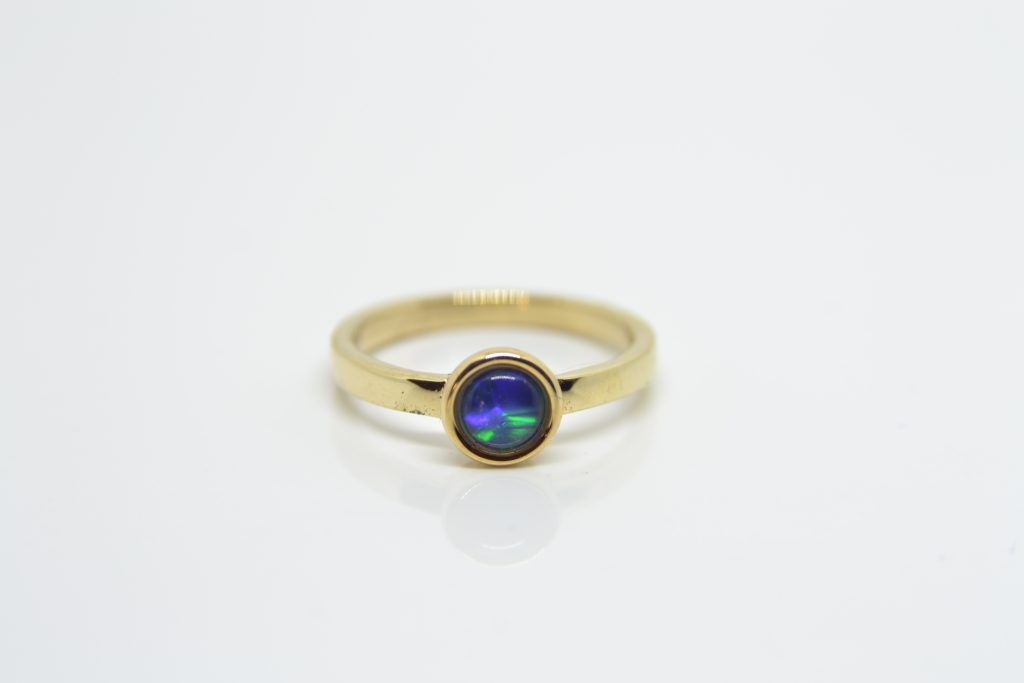
  • Bezel-set gemstones: A protective metal rim around the stone, ideal for active lifestyles.

Good design and setting choice significantly extend a gemstone’s lifespan. Browse our selection of handmade rings for inspiration.

Gemstones in Wedding Bands

Wedding bands can incorporate gemstones subtly:

  • Small sapphires or rubies set flush into the band
  • Mixed gemstone and diamond accents
  • Alternating coloured stones for symbolic meaning

These details add individuality without sacrificing practicality.

Bespoke Engagement and Wedding Rings

For couples who want a truly unique ring, bespoke options are the perfect solution. Allowing you to choose the exact gemstone you love, select a setting and metal that suits your lifestyle, and create something truly one of a kind.

At The Middle Green, we specialise in creating bespoke engagement and wedding rings using both traditional diamonds and carefully selected alternative gemstones.

Book your consultation to design a ring that reflects your story and will last a lifetime.

Jewellery Care Guide - find out how to care for your jewellery

Jewellery Care Guide

Jewellery Care Guide

Every piece you own tells a story, and with the right care, it can last for generations. From delicate gemstones to precious metals, understanding how to clean and maintain your jewellery is key to preserving its sparkle. Our guide walks you through the best practices for all your favourite pieces, so they stay as beautiful as the day you got them.

See Guide

Caring for Precious Pieces


Whether it’s your wedding or engagement ring, a necklace, or your favourite pair of earrings, every piece of jewellery deserves proper care to maintain its beauty for years to come.

However, without understanding the best cleaning techniques, you may end up inadvertently damaging your jewellery.

Different materials commonly used in jewellery such as gold, silver and platinum require specific cleaning methods. Additionally, gemstones require more careful handling to ensure they aren’t damaged during cleaning.

Our jewellery care guide runs through the most common types of metal and gemstones used in jewellery and how to keep them looking their best.

If you have a bespoke piece from us, we offer complimentary cleans. Get in touch to arrange your clean and keep your jewellery looking its best.

Jewellery Cleaning Guide


General Care


Regardless of the metal or gemstone used in your jewellery, following these general care guidelines will ensure any avoidable damage and discolouration.

  • Store jewellery separately in fabric lined cases when not in use to ensure no abrasion damage from rubbing against other jewellery.
  • Avoid wearing jewellery when cleaning, particularly when using harsh chemicals such as bleach which can damage your jewellery.
  • Remove jewellery whilst exercising to prevent damage from perspiration.
  • Remove jewellery when swimming to avoid damage from chlorine or salt.
  • Apply perfumes and skin products before putting your jewellery on to prevent discolouration.
  • Remove jewellery whilst showering to prevent damage from hair and skin products.
  • Keep jewellery out of direct sunlight and humid areas when stored.

Materials  


  • Gold, Rose Gold & Yellow Gold

    Whilst gold looks stunning when purchased, it can lose its shine over time with everyday wear. Fortunately, dull gold can be revitalised with simple cleaning techniques. 

    • Soak in gold cleaning solution or warm soapy water for 10 minutes  
    • Gently remove any debris using a soft bristled toothbrush 
    • Rinse thoroughly with lukewarm water  
    • Dry gently with a soft cloth  
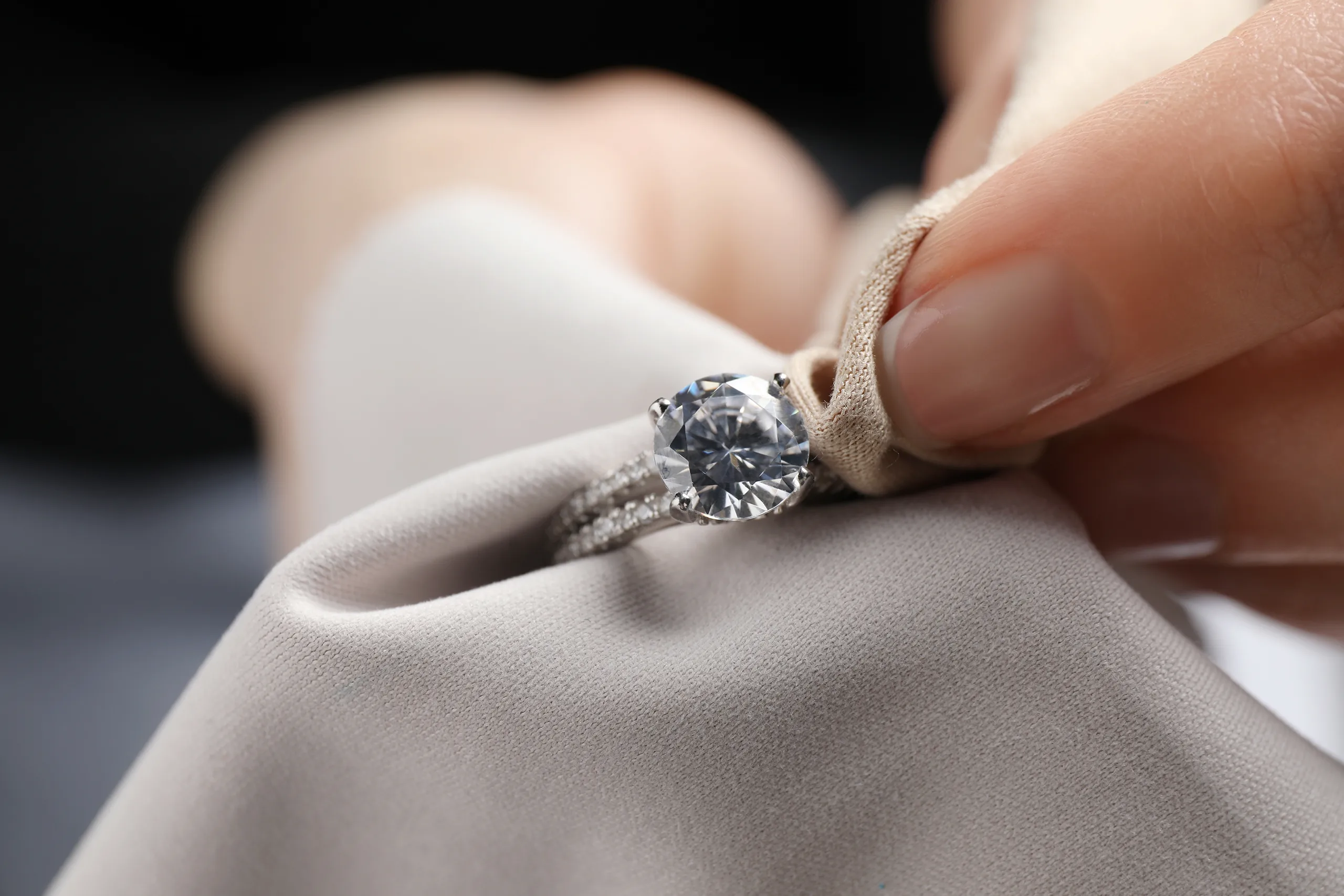
    • Polish with a jewellery polishing cloth to restore its shine  

    Rose gold and yellow gold can be cleaned in the same way. However, as rose gold contains copper, a cleaning formula specifically designed for gold and copper alloys is recommended. 

  • Silver

    Silver jewellery can tarnish and lose its shine over time due to oxidisation. Whilst this process is natural with everyday wear, it can easily be restored with cleaning.  

    • Soak in a silver cleaning solution or warm soapy water for 10 minutes 
    • For heavily tarnished silver, white vinegar and water can be used as an alternative   
    • Gently remove any debris using a soft bristled toothbrush 
    • Rinse thoroughly with lukewarm water  
    • Leave to air dry or use a specialist cloth for silver to dry 
  • Platinum & Palladium

    Both platinum and palladium are durable and dense metals. However, unlike other precious metals, platinum and palladium are prone to developing a natural matte (patina) over time. To avoid this, the metal should be cleaned regularly. 

    • Soak in jewellery cleaner or warm soapy water for 10 minutes  
    • Gently remove any debris using a soft bristled toothbrush 
    • Rinse thoroughly with lukewarm water  
    • Dry gently with a soft cloth  
    • Polish with a jewellery polishing cloth or soft cloth to restore its shine  

Gemstones


  • Diamond

    Despite their durability, diamonds can still scratch if cleaned incorrectly. Additionally, with everyday wear, diamonds can lose their shine.  

    • Soak in diamond cleaner or warm soapy water for 10 minutes  
    • Gently remove any debris using a soft bristled toothbrush 
    • Rinse thoroughly with lukewarm water  
    • Dry gently with a soft cloth  
  • Ruby

    Rubies are also extremely durable minerals, second only to diamonds.  

    • Fill a bowl with warm soapy water  
    • Gently remove any debris using a soft bristled toothbrush 
    • Rinse thoroughly with lukewarm water  
    • Dry gently with a soft cloth  
  • Onyx

    Similar to diamonds, onyx can be damaged with incorrect cleaning techniques despite how tough they are. Fortunately, onyx is simple to clean.  

    • Wipe the onyx with a cotton cloth to remove any dirt or dust  
    • For tough debris, soak the ring in warm soapy water for 10 minutes 
    • Gently remove any debris using a soft bristled toothbrush 
    • Rinse thoroughly with lukewarm water  
    • Leave to air dry 
  • Opals, Iolite & Pearls

    Because organic gemstones like opals, iolite and pearls are softer than mineral gemstones such as diamonds, they require more careful cleaning techniques to prevent damage. 

    • Fill a bowl with warm water with no cleaning solution or chemicals  
    • Use a soft cloth and gently scrub each of the gemstones, do not submerge them 
    • If there is stubborn dirt, use a soft brush to gently remove the debris 

    Soft gemstones such as opals, iolite and pearls should never be cleaned with steam or ultrasonic cleaners, as this can result in cracking and other damage.  

  • Tsavorite

    Whilst tsavorite is harder than other organic gemstones such as opals, pearls and iolite, it should still be cleaned carefully to avoid any damage to the stone. 

    • Fill a bowl with warm water with warm soapy water    
    • Gently remove any debris using a soft bristled toothbrush 
    • Dry gently with a soft cloth  

Premium Jewellery from The Middle Green

At The Middle Green, we believe that good jewellery should last a lifetime, that’s why we only use the finest quality materials sourced from reputable suppliers in all of our jewellery.  

Visit our online shop to browse a selection of jewellery available to buy online now. 

Explore Shop

Continue reading