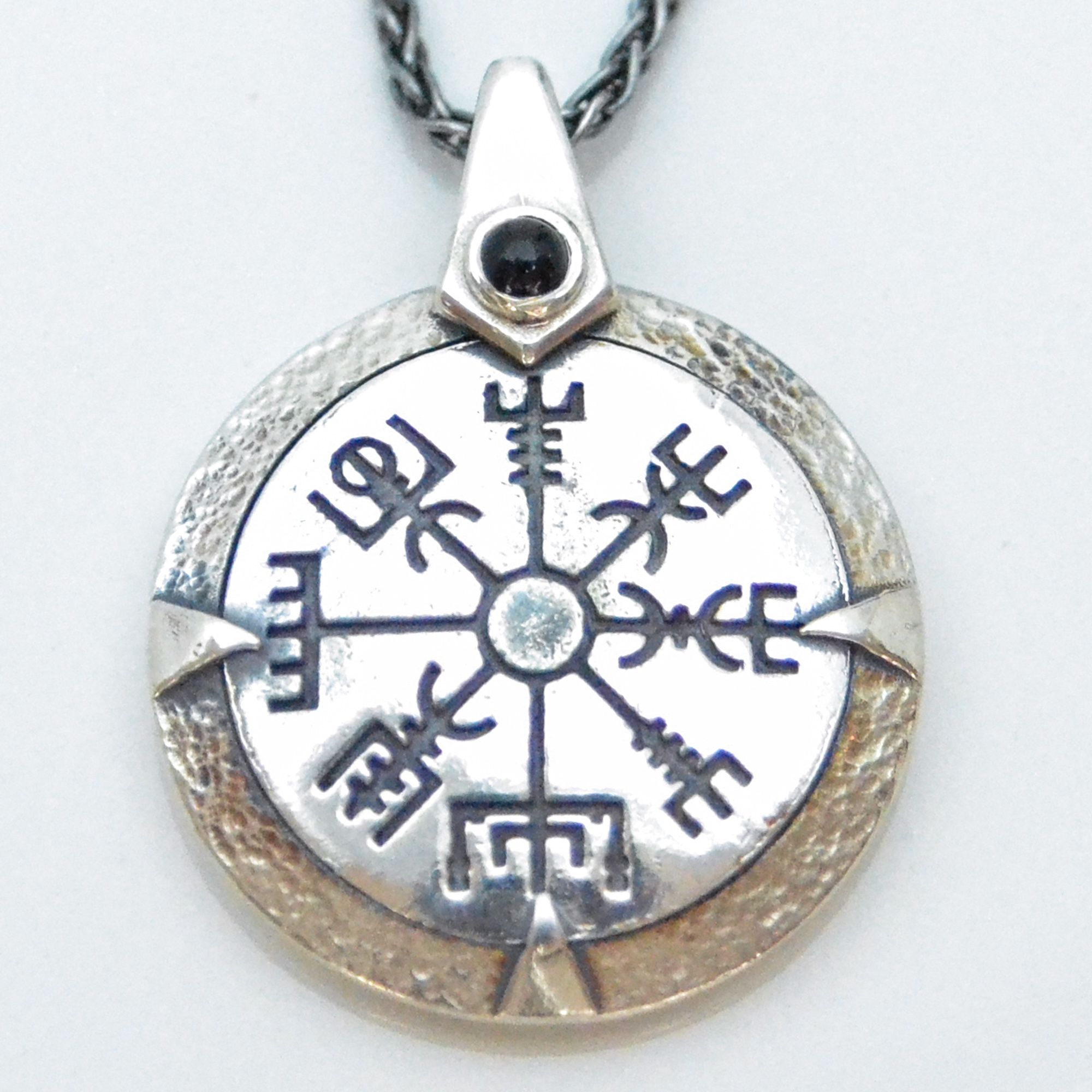
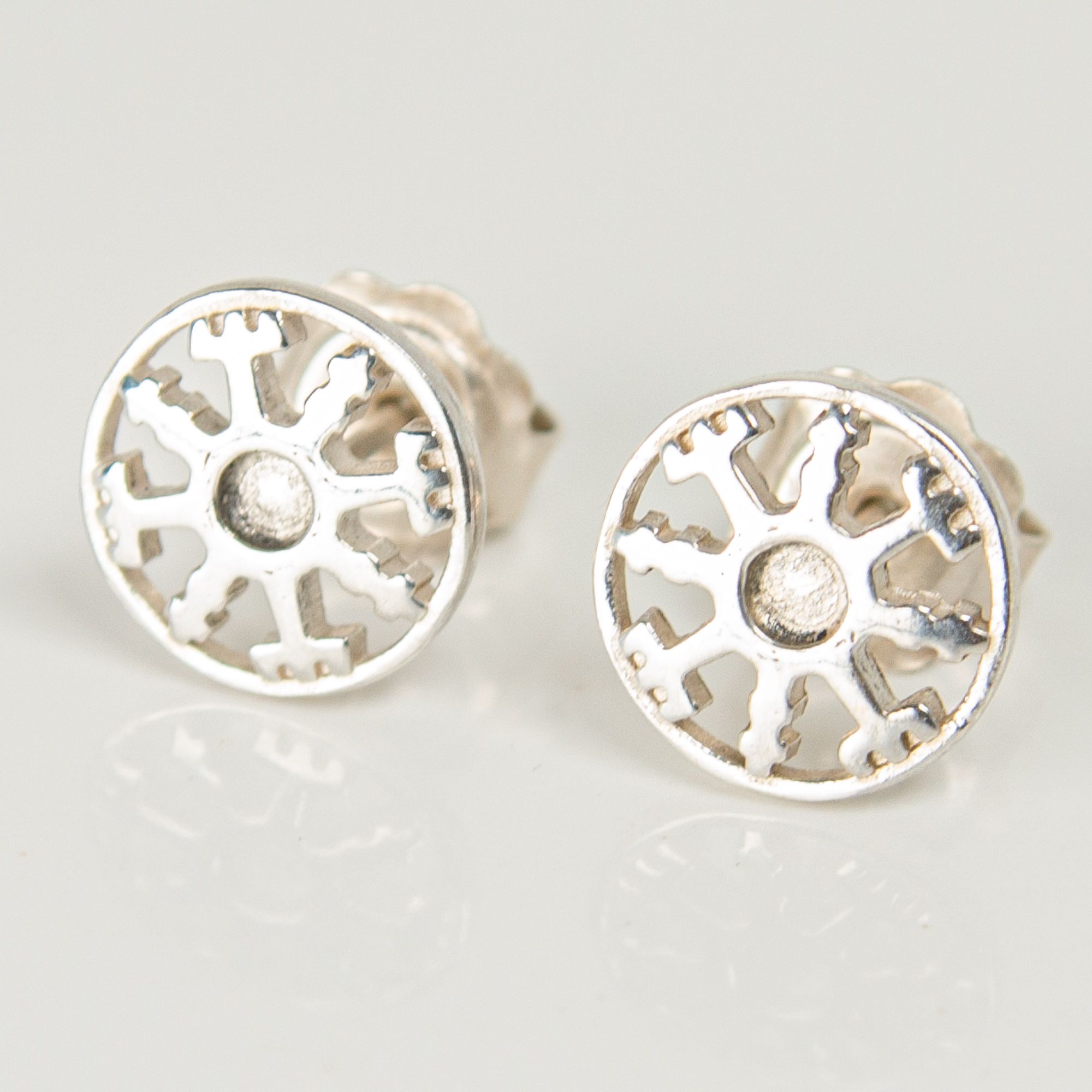
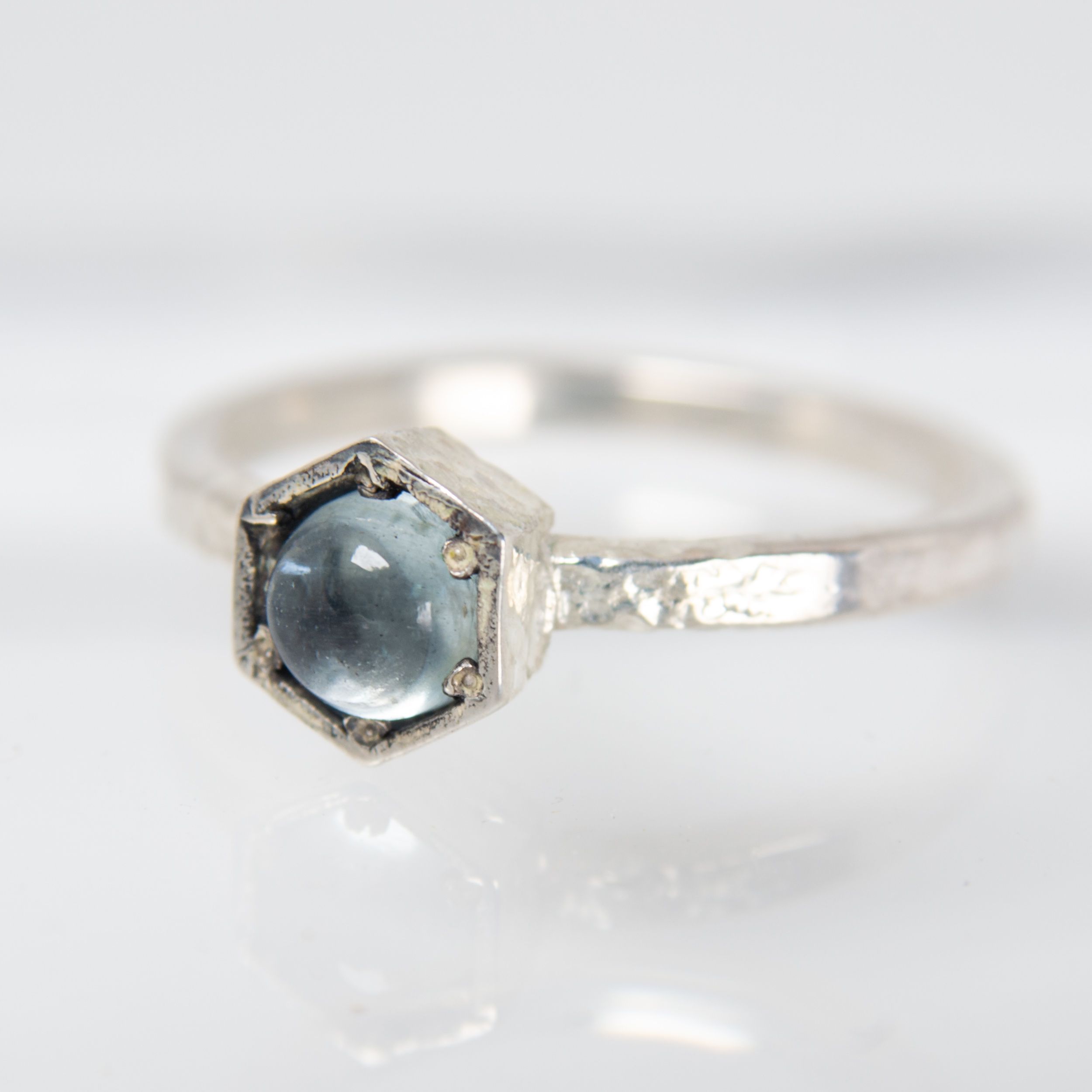
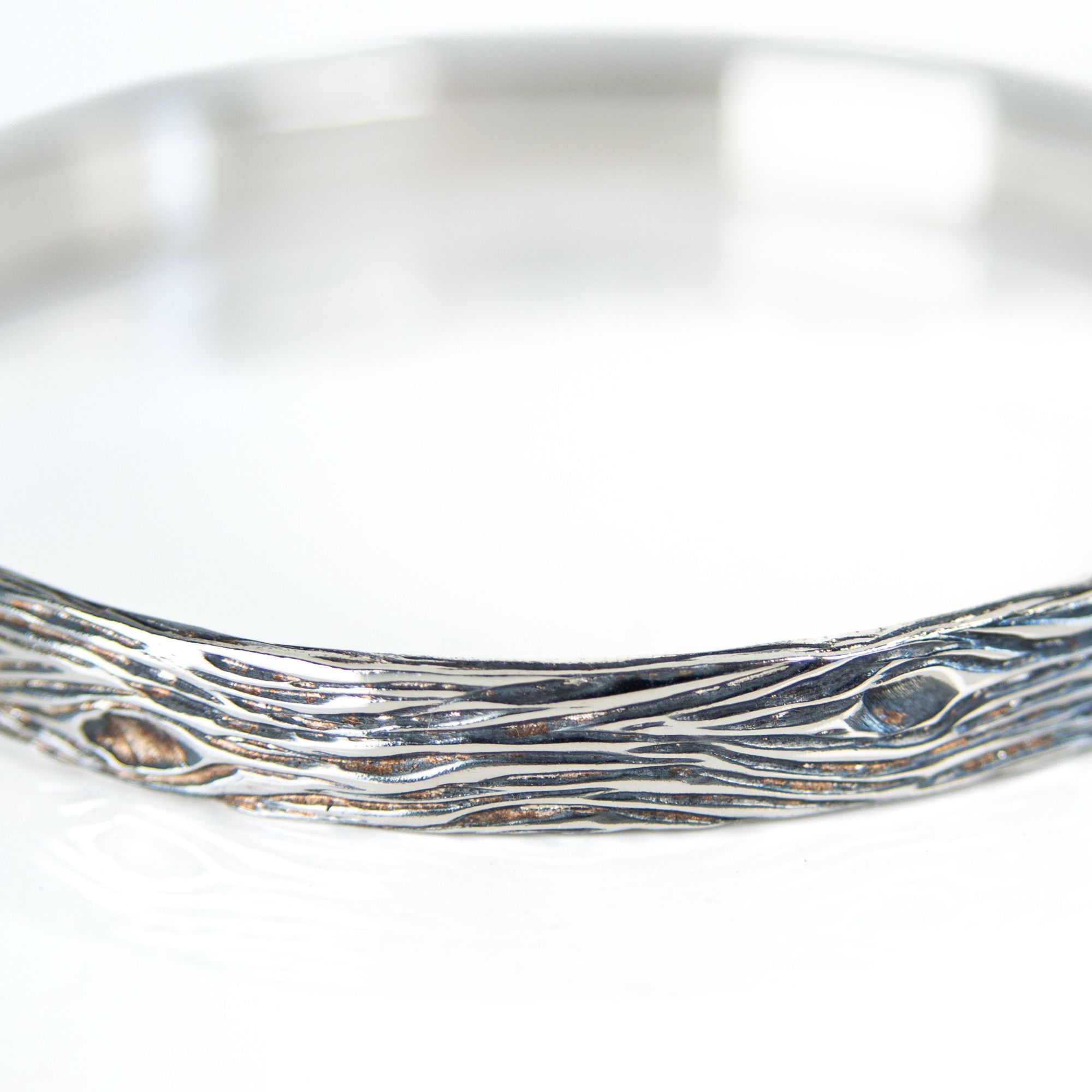
Using family diamonds in an engagement ring allows you to create something deeply personal while preserving an important part of your family’s history.
A new diamond.
A new design.
A new story.
Working with inherited stones feels different from the beginning.
Sometimes clients arrive at the workshop in Wiltshire with a single ring that has been worn for decades. Sometimes it is a small collection of jewellery that has sat unworn for years but still feels too important to part with.
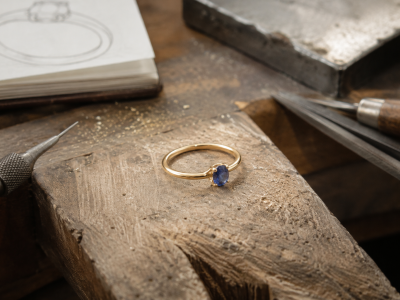
The stone survives.
The design changes around it.
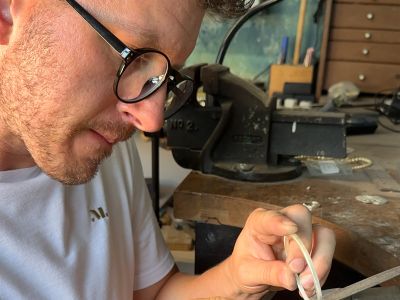
I’m Tom McDanielson, founder and maker behind The Middle Green, where I design and make bespoke engagement rings and heirloom remodelling projects using both newly sourced and inherited diamonds.
Why People Choose To Reuse Family Diamonds
For most people, it is not really about saving money.
It is about continuity.
A diamond that has already existed within a family often feels different to wear than something chosen entirely new. The value becomes layered over time.
You are not just commissioning a ring.
You are carrying something forward.
That can mean:
- remodelling inherited jewellery into something wearable again
- combining stones from multiple family rings
- resetting a diamond from an older engagement ring
- preserving sentimental stones while creating a completely different design
- giving jewellery another life rather than leaving it unworn in a box
A lot of bespoke engagement projects are really about preserving meaning rather than simply creating decoration.
A Lot Of These Projects Start With A Conversation
Most heirloom redesigns are less straightforward than people expect.
Often there is uncertainty around what should actually stay.
Sometimes the original ring feels dated but the stone still matters.
Sometimes the jewellery itself carries emotional weight even if it is never realistically going to be worn again.
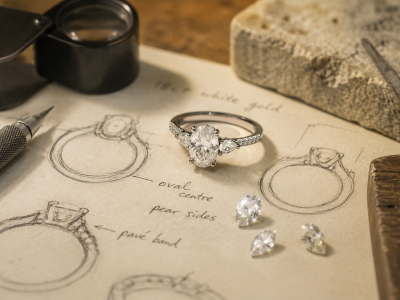
A lot of consultations end up with inherited jewellery spread across the bench while we work out what should be preserved, what can realistically be reused, and what the next version could become.
Those conversations usually shape the final ring more than trends or reference images do.
Book a consultation
What Can Actually Be Reused?
Usually the diamonds themselves.
Older settings are often heavily worn, thin, damaged, or built in ways that do not suit a modern ring structurally. The stones are normally the most valuable part to preserve.
Commonly reused stones include:
- old cut diamonds
- round brilliant diamonds
- small accent stones
- heirloom side stones
- sapphires and coloured stones from inherited jewellery
Older diamonds are often especially interesting because they were cut differently.
Old European cuts and rose cuts tend to feel softer and more irregular than modern stones. They catch light differently. Slight asymmetry and hand-cut proportions often give them far more character.
Perfect can feel strangely lifeless sometimes.
The First Step Is Normally Assessment
Before any design work starts, the stones need checking properly.
I normally look at:
- chips or damage
- wear on the girdle
- previous repair work
- stone dimensions
- whether the stones are suitable for daily wear
- whether they structurally suit the proposed design
Not every inherited stone should automatically go into a new engagement ring.
Sometimes a stone is too worn.
Sometimes proportions make setting difficult.
Sometimes sentimental value outweighs practicality.
Part of the process is being honest about risk before anything is made.
Designing Around Existing Stones
Designing around inherited diamonds is usually more restrictive than designing from scratch.
The stone dimensions already exist.
The proportions already exist.
The design has to respect that.
But those limitations often create stronger work.
Learn more about our bespoke jewellery process
Instead of endlessly browsing options, the project becomes about balance, proportion, texture, and how to make the stone feel at home in a new piece.
The strongest heirloom redesigns usually do not feel forced.
They feel like the stone naturally belonged there all along.
Old Diamonds Work Beautifully In More Organic Settings
One thing I particularly like about older diamonds is that they often suit softer, more organic settings.
Warmer gold tones.
Slightly weathered finishes.
Heavier claw work.
Hand-finished surfaces that still show traces of the making process.
Old stones rarely need ultra-clinical settings to feel special.
In many ways, the imperfections are part of what give them character.
I’ve increasingly found myself drawn toward older diamonds and softer design language in recent years, particularly while developing the next engagement ring pieces for The Middle Green.
What Happens To The Original Jewellery?
That depends entirely on the project.
Some people want the original ring preserved alongside the new piece.
Others are happy for the old ring to be dismantled completely.
Occasionally small details can still be carried across:
- engraving
- hidden details
- tiny accent stones
- metal melted into a new piece where practical
Although realistically, in many redesign projects, it is the emotional continuity that matters more than physically preserving every element.
The Emotional Side Of The Process
People often underestimate how emotional jewellery becomes.
Especially engagement rings.
Objects absorb memory slowly over time. Jewellery just seems to do it more than most things.
A diamond can outlast generations.
The meaning around it changes repeatedly.
That is part of what makes inherited stones interesting to work with.
You are not creating meaning from nothing.
You are adding another layer to something that already matters.
Frequently Asked Questions
Can old diamonds be reused in a new engagement ring?
Usually, yes.
Most inherited diamonds can be removed from their original setting and reset into a completely new design, assuming the stone is structurally sound.
Can inherited gold also be reused?
Sometimes, but not always directly.
Older gold alloys can behave unpredictably when remelted, so in many cases it is safer to use the inherited gold as material credit toward a new ring rather than physically incorporating it. We prefer to use existing gold for the heavier parts of a design (ie the band rather than the more delicate setting) where it is more structurally sound.
Are old cut diamonds suitable for modern engagement rings?
Absolutely.
Old cut diamonds often work beautifully in contemporary handmade settings, especially designs with softer proportions and more organic finishes.
What if the original ring is damaged?
That is very common.
In most cases the stones themselves are still usable even if the original setting is heavily worn or damaged.
Do I need to know exactly what I want before booking?
Not at all.
Most bespoke engagement projects develop gradually through conversation, sketches, stone assessment, and trying proportions in person.
Considering An Heirloom Redesign?
I regularly work with inherited diamonds and sentimental jewellery from clients across Swindon, Wiltshire, and the wider UK.
Some projects involve subtle redesigns.
Others become entirely new engagement rings built around stones that already carry decades of history.
If you have family jewellery you are considering remodelling, you can explore the bespoke process through the engagement ring and bespoke jewellery sections of the website, or get in touch directly to discuss the project.