Author: Tom McDanielson

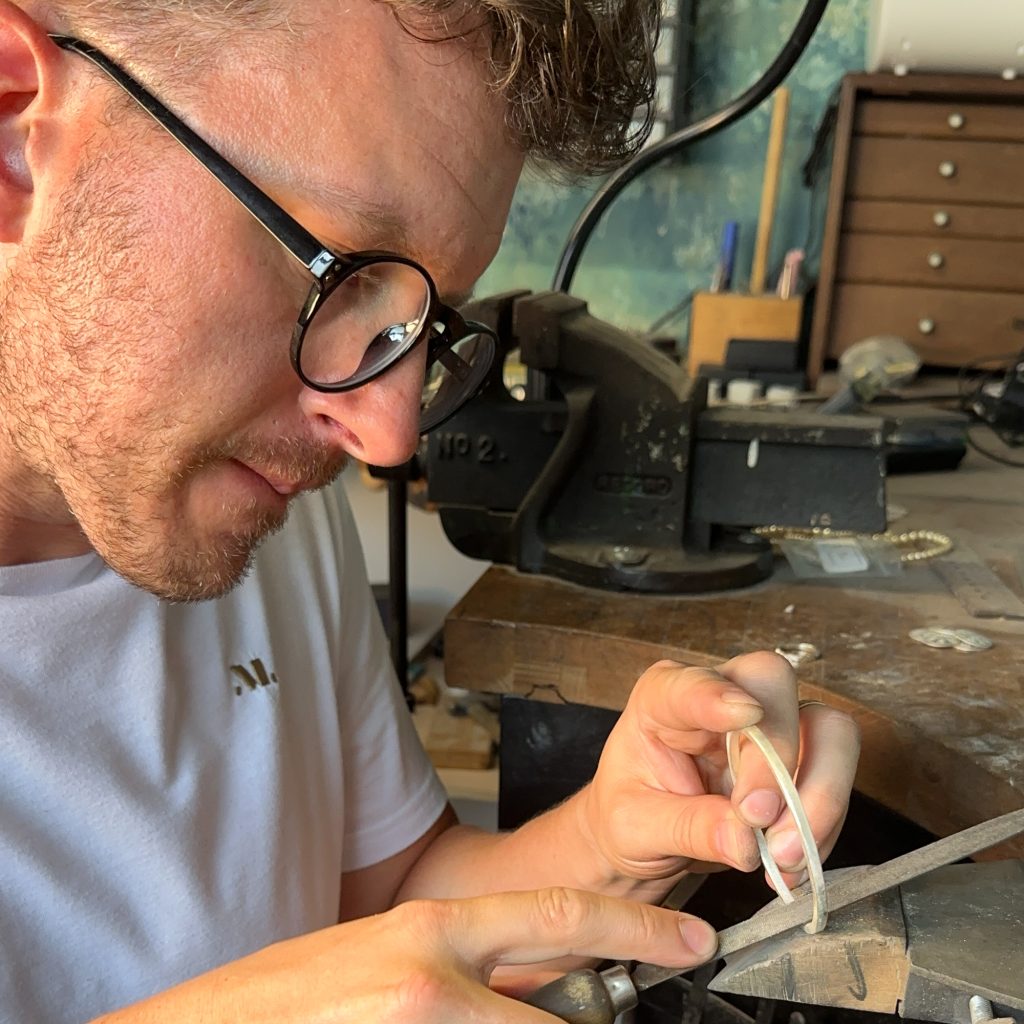
Tom McDanielson is a jewellery designer and goldsmith based in Wiltshire, specialising in bespoke engagement rings, heirloom redesign, and symbolic jewellery through The Middle Green. His work focuses on handmade pieces that balance texture, permanence, and personal meaning.

Natural vs Lab Grown Diamonds: What Should You Choose?

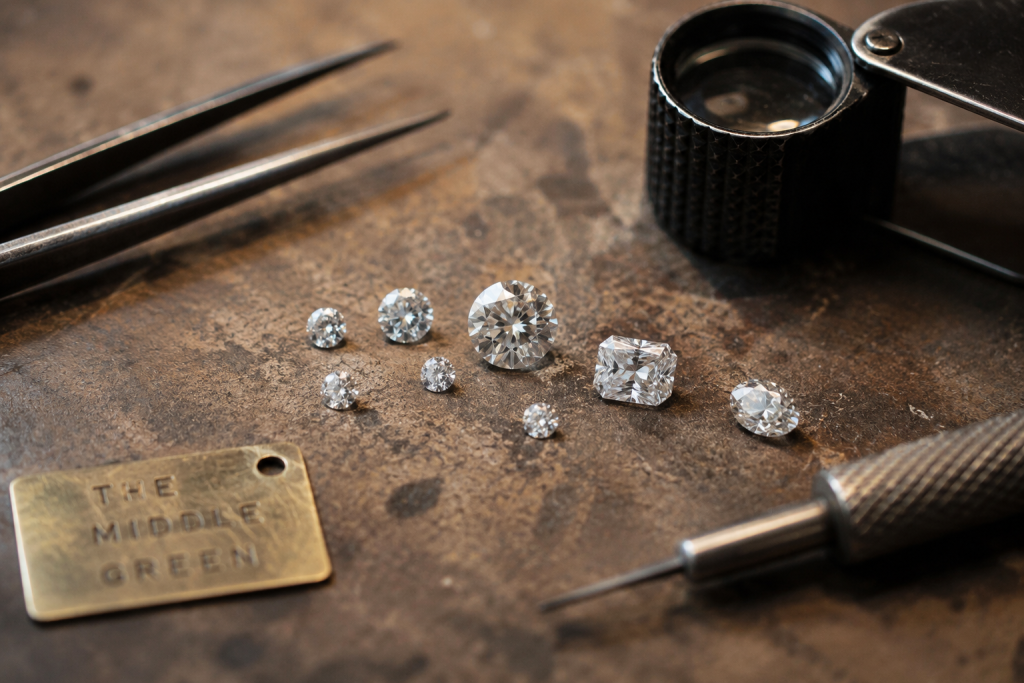
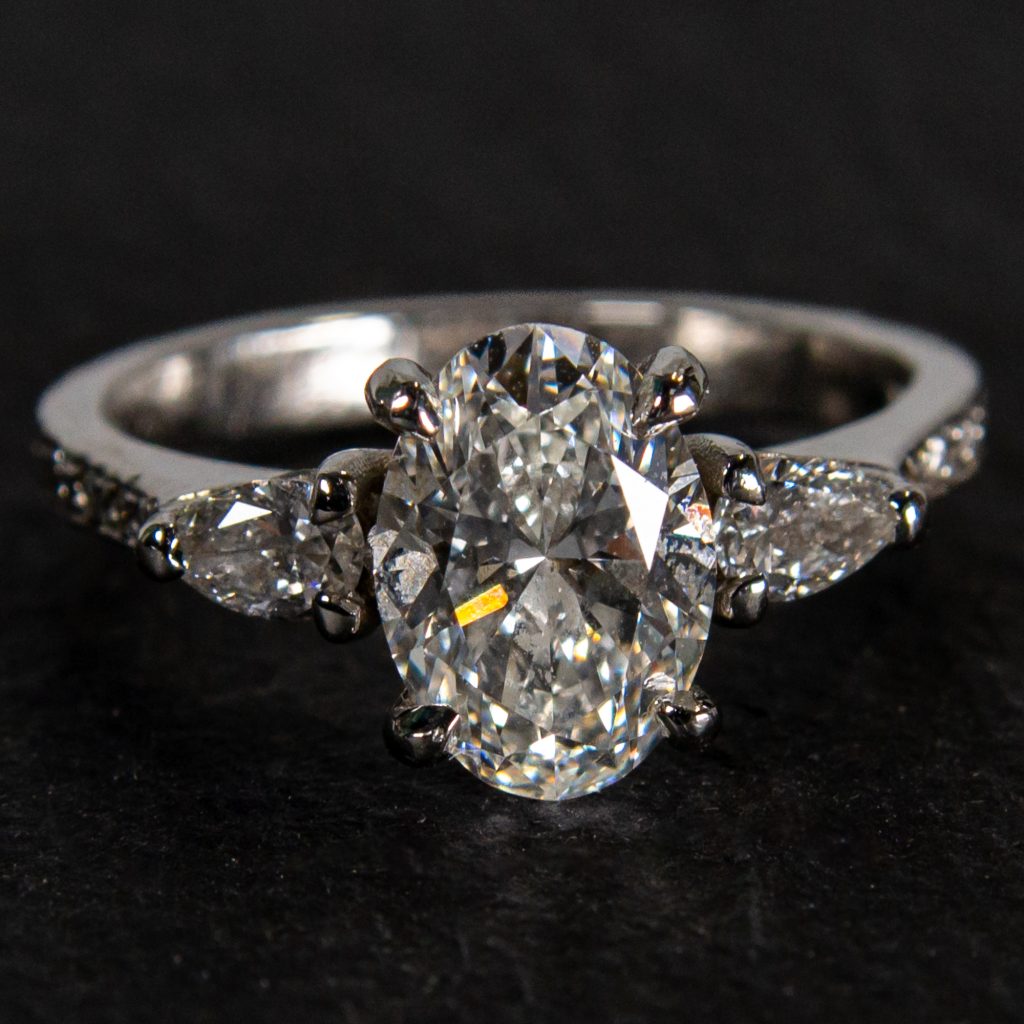
If you’re choosing an engagement ring today, you’ll almost certainly come across the question of natural versus lab grown diamonds.Both are real diamonds.Both are made from carbon.Both are incredibly hard, durable, and suitable for everyday wear.At first glance, they can appear almost identical.The real difference lies in where they come from, what they represent, and how you feel about wearing them.

Book a Consultation

What Is A Natural Diamond?

A natural diamond is formed deep within the earth over billions of years through immense heat and pressure before eventually being brought closer to the surface through volcanic activity.

Every natural diamond is the result of a process that cannot be replicated by time alone. It is a finite material created by nature over a timescale far beyond human experience.

For many people, that rarity and permanence form part of the appeal.

What Is A Lab Grown Diamond?

A lab grown diamond has the same chemical composition as a natural diamond but is created in a controlled environment using modern technology.

It is still a real diamond.

It is not cubic zirconia, moissanite, or an imitation stone.

To the eye, a lab grown diamond can look identical to a natural diamond.

The difference is that one was formed naturally over billions of years, while the other was manufactured in a matter of weeks.

Why Are Lab Grown Diamonds Less Expensive?

The primary reason is supply.

Natural diamonds are finite.

Lab grown diamonds can be produced whenever there is demand.

As manufacturing processes improve and production increases, prices continue to fall.

This allows buyers to purchase larger stones for the same budget.

The Question Of Value

For some people, a diamond is simply about appearance.

For others, the story behind the stone matters just as much as how it looks.

Natural diamonds remain rare because nature creates them in limited quantities.

Lab grown diamonds can be reproduced indefinitely.

As a result, natural diamonds have historically held their value more effectively, while lab grown diamonds have seen significant price reductions as production has expanded.

My View As A Goldsmith

Both natural and lab grown diamonds can be used to create beautiful engagement rings.

However, I personally favour natural diamonds.

Contact Tom today

Not because lab grown diamonds are inferior, but because I believe engagement rings should celebrate authenticity.

A natural diamond carries a story that cannot be recreated. It is a material shaped by the earth itself and formed long before any of us existed.

That feels meaningful in a way that a manufactured alternative never quite does.

If a client wants the character, rarity and history that diamonds are known for, I will usually recommend a natural stone.

Considering Alternatives?

If budget is the main concern, my preference is often not to replace a natural diamond with a lab grown version.

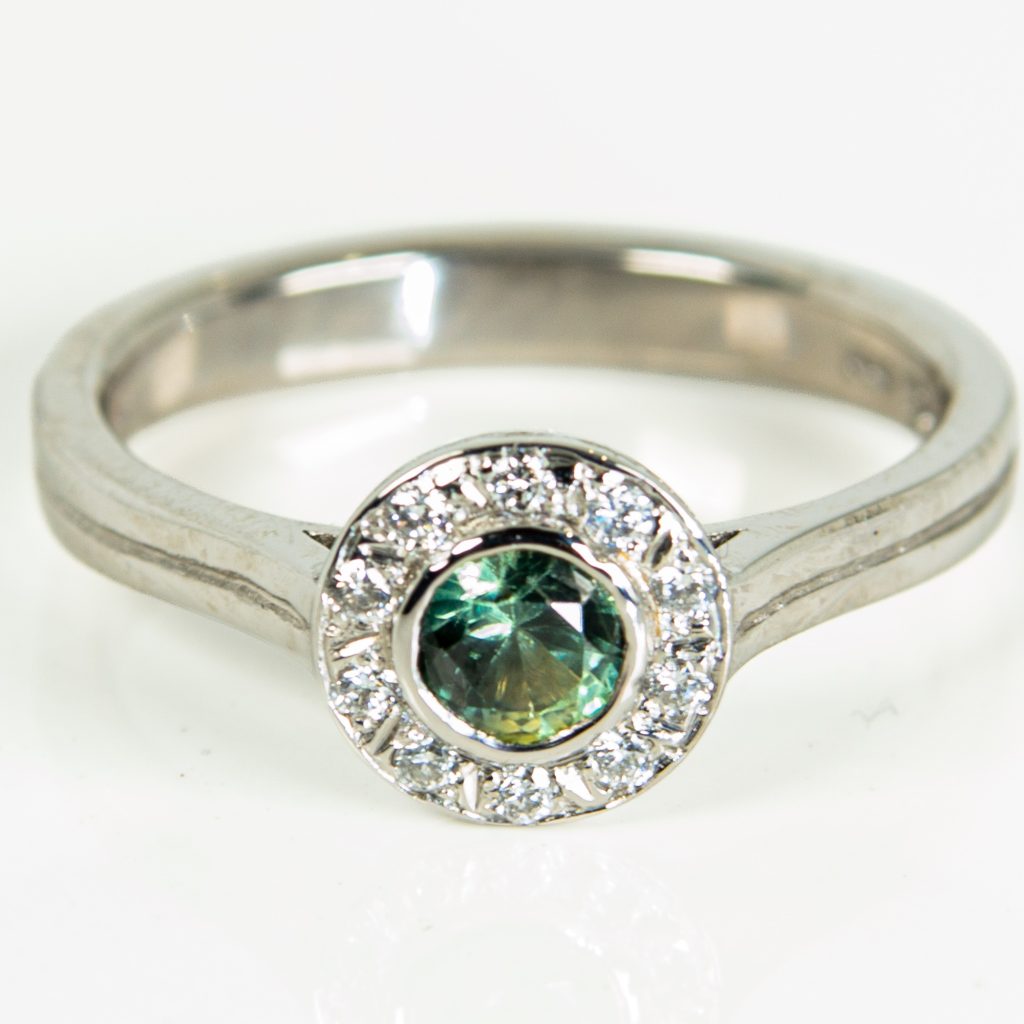
Instead, it can be worth exploring other beautiful natural gemstones.

Using Family Diamonds In A New Engagement Ring

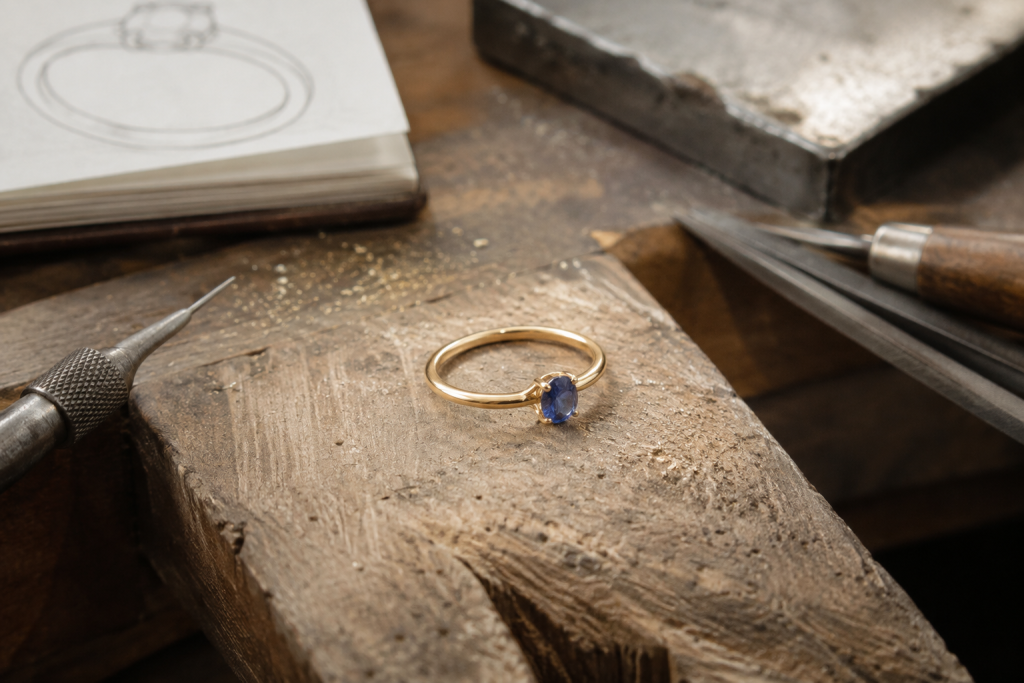
Sapphires, spinels, garnets and other coloured stones each have their own character, history and identity.

Rather than choosing a manufactured version of a diamond, some clients prefer to choose a different natural gemstone entirely and celebrate what makes that material unique.

Which Should You Choose?

There is no universal right answer.

A lab grown diamond may suit someone whose priority is achieving the largest possible stone for their budget.

A natural diamond may suit someone who values rarity, geological history and the idea of wearing something that nature created over billions of years.

The best choice is the one that aligns with your priorities and the story you want your ring to tell.

Book a Consultation

At The Middle Green, every engagement ring begins with a conversation. Whether you choose a natural diamond, an heirloom stone, or an alternative gemstone, the goal remains the same: creating a piece with lasting personal significance that can be worn, lived with and eventually passed on.

FAQs

Are lab grown diamonds real diamonds?

Yes. Lab grown diamonds have the same chemical composition and hardness as natural diamonds.

Can you tell the difference between a natural and lab grown diamond?

In most cases, no. Specialist equipment is often required to identify the origin of a diamond.

Do natural diamonds hold their value better?

Historically, natural diamonds have retained value more effectively due to their limited supply, while lab grown diamond prices have generally fallen as production has increased.

Can I use a sapphire instead of a diamond for an engagement ring?

Yes. Sapphires are one of the most popular alternatives to diamonds and are available in a wide range of colours.

Can I use a family diamond in a new engagement ring?

In many cases, yes. Existing diamonds can often be incorporated into a completely new bespoke design.

Why I Keep Making Vegvísir Jewellery

People often ask why I use the Vegvísir symbol so frequently in my work.

Partly because I like the design.

But mostly because I think it captures something recognisably human.

As a jeweller, I’ve realised that people rarely buy jewellery simply because it looks nice.

The pieces that stay with people tend to represent something.

A relationship.

A memory.

A period of life.

A decision.

A reminder.

The Vegvísir seems to fit naturally into that.

It’s Not Quite The Viking Symbol Most People Think It Is

The Vegvísir is often described as a Viking compass.

The reality is slightly more complicated.

The symbol appears in Icelandic manuscripts from the nineteenth century, most famously the Huld Manuscript from 1860, rather than surviving Viking Age sources.

For some people that diminishes the symbol.

For me, it doesn’t really change anything.

Because what interests me isn’t whether Vikings wore it.

What interests me is why people still do.

The Part That Matters To Me

I’ve spent years making jewellery for people marking important moments in their lives.

Engagements.

Marriages.

Anniversaries.

Losses.

Fresh starts.

Inherited jewellery carrying family stories.

One thing I’ve noticed is that people often choose symbols when they’re standing at some kind of crossroads.

Not because they believe a symbol will change the outcome.

Because it helps them remember who they want to be while they’re moving through it.

That’s what I think the Vegvísir represents.

Not certainty.

Direction.

Why It Belongs At The Middle Green

The Middle Green has never really been about recreating history.

I’m not interested in making museum replicas.

What interests me is creating modern talismans.

Pieces that feel personal.

Pieces that feel carried rather than displayed.

The Vegvísir fits naturally within that idea.

Not because it’s ancient.

Not because it’s Viking.

But because people still connect with what it represents.

Guidance.

Direction.

Finding your way when the route ahead isn’t entirely clear.

That’s something people needed in 1860.

It’s something people need now.

And it’s probably something we’ll always need.

Every Vegvísir piece is designed and handmade by Tom McDanielson in my Wiltshire workshop.

How To Design An Engagement Ring Without Ruining The Surprise

First Things First

You Do Not Need To Know What You’re Doing

Most people designing an engagement ring have never bought jewellery before

So if you currently feel slightly out of your depth, that’s fairly normal

The majority of bespoke engagement rings start with:
• a rough budget
• a few screenshots
• maybe a vague idea of style
• and a lot of “I’m not really sure what I’m looking for”

That’s enough to begin

Part of my job is helping narrow things down and make the process feel manageable rather than overwhelming

Keeping The Whole Thing Secret

This is usually much easier than people expect

Most engagement rings are designed quietly through:
• messages
• emails
• short calls
• or one relaxed meeting

You do not need to disappear for mysterious full-day appointments every weekend

A lot of the process happens gradually in the background while normal life carries on

Book a consultation

I’m also very aware that people are often trying not to get caught

So communication can stay fairly discreet and low-pressure throughout (feel free to mute our WhatsApp chat)

How To Figure Out What They’ll Actually Like

Most people already have more clues than they realise

The easiest place to start is simply paying attention to what they already wear

Things like:
yellow gold or silver
• minimal or detailed
• delicate or substantial
• vintage feeling or modern
• polished or slightly worn-in

usually tell you far more than random trend articles online

If they wear the same ring every day, that’s probably a better reference point than Instagram

You can also quietly look at:
• Pinterest boards
• saved Instagram posts
• jewellery brands they already follow
• hints from friends or siblings

You are not trying to read their mind perfectly

You are just trying to build a clear direction

Ring Size Without Making It Obvious

This is the part people panic about most

Realistically, there are a few ways around it

You can:
• borrow an existing ring briefly
• ask a friend or family member carefully
• trace a ring on paper
• compare against your own fingers
• or estimate and resize afterwards

Resizing engagement rings later is extremely common

People massively overthink this part

What The Process Usually Looks Like

Most bespoke engagement rings follow a fairly simple process:

1. Initial Conversation

We talk through:
• budget
• style
• stones
• practical wearability
• general direction

Nothing formal or intimidating

2. Stone Sourcing & Design Direction

Once I understand the overall feel of the ring, I’ll source suitable stones and begin narrowing down design options

Usually this becomes much clearer surprisingly quickly

3. Design Refinement

This is where proportions, settings, band shape, texture and small details get adjusted

A lot of the important decisions here are actually about:
• comfort
• durability
• balance
• and how the ring feels to wear long term

not just how it photographs

4. Making The Ring

Once everything is approved, the ring gets made and finished by hand

This is usually the calmest part of the whole process

You’ve already done the hard bit by deciding to ask someone to marry you

The Important Thing People Forget

The proposal matters far more than tiny technical details

Years later, nobody remembers whether a claw was fractionally thicker than another one

They remember:
• how nervous you were
• where it happened
• what was said
• and how it felt opening the box

That’s the real memory

The ring simply becomes part of it afterwards

Final Thought

Most people come into this process worried they’ll get something wrong

In reality, engagement rings are rarely about perfection

Book a consultation

They’re usually about paying attention properly to somebody you love

The rest can be figured out together

Can Family Diamonds Be Used In An Engagement Ring?

Using family diamonds in an engagement ring allows you to create something deeply personal while preserving an important part of your family’s history.

A new diamond.
A new design.
A new story.

Working with inherited stones feels different from the beginning.

Sometimes clients arrive at the workshop in Wiltshire with a single ring that has been worn for decades. Sometimes it is a small collection of jewellery that has sat unworn for years but still feels too important to part with.

The stone survives.
The design changes around it.

I’m Tom McDanielson, founder and maker behind The Middle Green, where I design and make bespoke engagement rings and heirloom remodelling projects using both newly sourced and inherited diamonds.

Why People Choose To Reuse Family Diamonds

For most people, it is not really about saving money.

It is about continuity.

A diamond that has already existed within a family often feels different to wear than something chosen entirely new. The value becomes layered over time.

You are not just commissioning a ring.
You are carrying something forward.

That can mean:

  • remodelling inherited jewellery into something wearable again
  • combining stones from multiple family rings
  • resetting a diamond from an older engagement ring
  • preserving sentimental stones while creating a completely different design
  • giving jewellery another life rather than leaving it unworn in a box

A lot of bespoke engagement projects are really about preserving meaning rather than simply creating decoration.

A Lot Of These Projects Start With A Conversation

Most heirloom redesigns are less straightforward than people expect.

Often there is uncertainty around what should actually stay.
Sometimes the original ring feels dated but the stone still matters.
Sometimes the jewellery itself carries emotional weight even if it is never realistically going to be worn again.

A lot of consultations end up with inherited jewellery spread across the bench while we work out what should be preserved, what can realistically be reused, and what the next version could become.

Those conversations usually shape the final ring more than trends or reference images do.

Book a consultation

What Can Actually Be Reused?

Usually the diamonds themselves.

Older settings are often heavily worn, thin, damaged, or built in ways that do not suit a modern ring structurally. The stones are normally the most valuable part to preserve.

Commonly reused stones include:

  • old cut diamonds
  • round brilliant diamonds
  • small accent stones
  • heirloom side stones
  • sapphires and coloured stones from inherited jewellery

Older diamonds are often especially interesting because they were cut differently.

Old European cuts and rose cuts tend to feel softer and more irregular than modern stones. They catch light differently. Slight asymmetry and hand-cut proportions often give them far more character.

Perfect can feel strangely lifeless sometimes.

The First Step Is Normally Assessment

Before any design work starts, the stones need checking properly.

I normally look at:

  • chips or damage
  • wear on the girdle
  • previous repair work
  • stone dimensions
  • whether the stones are suitable for daily wear
  • whether they structurally suit the proposed design

Not every inherited stone should automatically go into a new engagement ring.

Sometimes a stone is too worn.
Sometimes proportions make setting difficult.
Sometimes sentimental value outweighs practicality.

Part of the process is being honest about risk before anything is made.

Designing Around Existing Stones

Designing around inherited diamonds is usually more restrictive than designing from scratch.

The stone dimensions already exist.
The proportions already exist.
The design has to respect that.

But those limitations often create stronger work.

Learn more about our bespoke jewellery process

Instead of endlessly browsing options, the project becomes about balance, proportion, texture, and how to make the stone feel at home in a new piece.

The strongest heirloom redesigns usually do not feel forced.

They feel like the stone naturally belonged there all along.

Old Diamonds Work Beautifully In More Organic Settings

One thing I particularly like about older diamonds is that they often suit softer, more organic settings.

Warmer gold tones.
Slightly weathered finishes.
Heavier claw work.
Hand-finished surfaces that still show traces of the making process.

Old stones rarely need ultra-clinical settings to feel special.

In many ways, the imperfections are part of what give them character.

I’ve increasingly found myself drawn toward older diamonds and softer design language in recent years, particularly while developing the next engagement ring pieces for The Middle Green.

What Happens To The Original Jewellery?

That depends entirely on the project.

Some people want the original ring preserved alongside the new piece.
Others are happy for the old ring to be dismantled completely.

Occasionally small details can still be carried across:

  • engraving
  • hidden details
  • tiny accent stones
  • metal melted into a new piece where practical

Although realistically, in many redesign projects, it is the emotional continuity that matters more than physically preserving every element.

The Emotional Side Of The Process

People often underestimate how emotional jewellery becomes.

Especially engagement rings.

Objects absorb memory slowly over time. Jewellery just seems to do it more than most things.

A diamond can outlast generations.
The meaning around it changes repeatedly.

That is part of what makes inherited stones interesting to work with.
You are not creating meaning from nothing.
You are adding another layer to something that already matters.

Frequently Asked Questions

Can old diamonds be reused in a new engagement ring?

Usually, yes.

Most inherited diamonds can be removed from their original setting and reset into a completely new design, assuming the stone is structurally sound.

Can inherited gold also be reused?

Sometimes, but not always directly.

Older gold alloys can behave unpredictably when remelted, so in many cases it is safer to use the inherited gold as material credit toward a new ring rather than physically incorporating it. We prefer to use existing gold for the heavier parts of a design (ie the band rather than the more delicate setting) where it is more structurally sound.

Are old cut diamonds suitable for modern engagement rings?

Absolutely.

Old cut diamonds often work beautifully in contemporary handmade settings, especially designs with softer proportions and more organic finishes.

What if the original ring is damaged?

That is very common.

In most cases the stones themselves are still usable even if the original setting is heavily worn or damaged.

Do I need to know exactly what I want before booking?

Not at all.

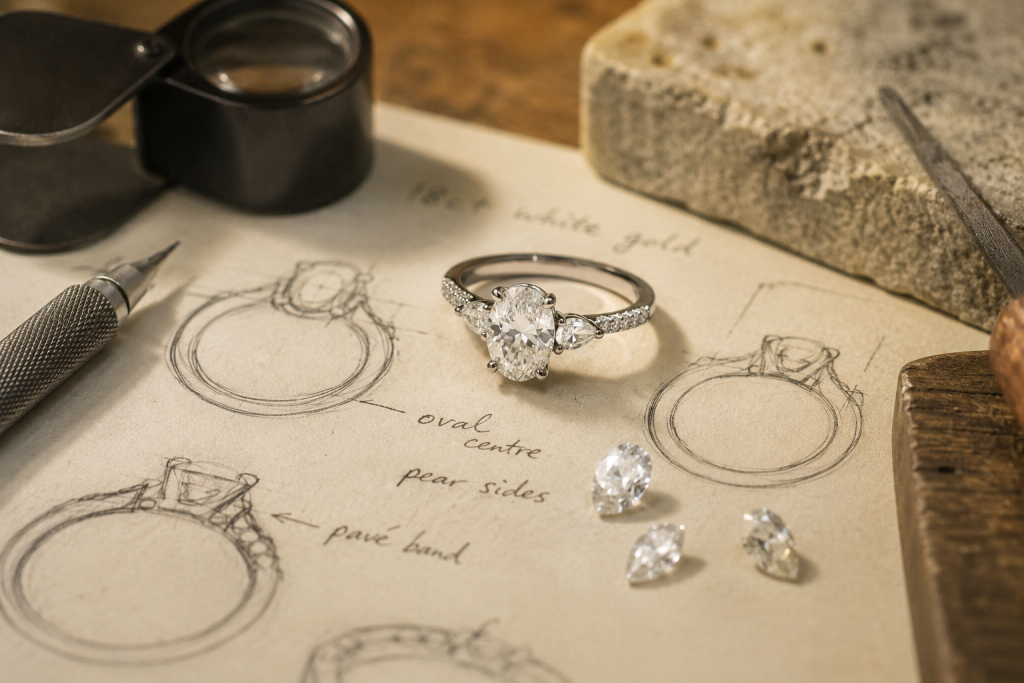
Most bespoke engagement projects develop gradually through conversation, sketches, stone assessment, and trying proportions in person.

Considering An Heirloom Redesign?

I regularly work with inherited diamonds and sentimental jewellery from clients across Swindon, Wiltshire, and the wider UK.

Some projects involve subtle redesigns.
Others become entirely new engagement rings built around stones that already carry decades of history.

If you have family jewellery you are considering remodelling, you can explore the bespoke process through the engagement ring and bespoke jewellery sections of the website, or get in touch directly to discuss the project.

Why I Stamp Runes by Hand (and Don’t Chase Perfection)

Most of the runes I stamp don’t land exactly the same way twice

Some sit slightly deeper
Some spread a touch wider in the silver
Occasionally one edge is sharper than the rest

That isn’t something I correct every time

The reality of stamping

Each rune is struck by hand into solid metal
There’s no jig holding it in place
No machine applying consistent pressure

It’s just the stamp, a hammer, and judgement in the moment

Silver moves more than people expect
Even a small difference in force changes how the mark sits

You learn to read it as you go
Rather than forcing it into something uniform

This is the exact pendant this came from

Why I leave variation in

There’s a point where correcting something removes what made it good in the first place

If a rune lands slightly deeper but feels right
I’ll leave it

If the edges soften into the surface
I’ll leave that too

If you’re thinking about something more personal, details on bespoke work are here

Trying to make every piece identical usually leads to something flatter
Less considered
More like production than making

That’s not what these are meant to be

What this means for the piece you wear

No two marks are exactly the same

Even when the symbol is identical
The way it sits in the metal will differ slightly

Over time, that mark wears with you
Edges soften further
High points pick up light differently

It becomes less about how it looked on the bench
And more about how it settles into your day to day

If you’re unsure which rune to go with, I’ve written a simple guide here

Why that matters

A lot of jewellery is designed to stay unchanged

Perfect surface
Perfect symmetry
Perfect repeatability

That has its place

But for something worn daily
Handled
Carried

A bit of variation tends to hold up better

It gives the piece somewhere to go over time

Rather than trying to keep it exactly as it started

Where this fits

This is how all Seidr pieces are made
Each rune stamped individually into recycled silver, then finished by hand

You can see the current pieces here

What Makes Handmade Jewellery Different

(And Why It Matters)

Most jewellery is designed to look good at a glance

Very little of it is designed to be lived with

That difference starts with how it is made

What “handmade” actually means

The term gets used loosely

In reality, there’s a spectrum

At one end, you have mass-produced pieces
Cast in bulk, polished by machine, finished to be identical

At the other, you have work that is shaped, adjusted, and finished by hand
One piece at a time

This is where handmade jewellery sits

Not perfect
Not identical
But considered at every stage

The process is slower, and that’s the point

A handmade piece passes through fewer hands, but more decisions

Every surface is checked
Edges are refined by eye
Proportions are adjusted in real time

There’s no “good enough” point built into a production line

It’s finished when it feels right

That difference is subtle, but it shows over time
In how the piece wears
In how it holds up
In how it feels when you pick it up, designed to be worn daily

Small imperfections are not flaws

Machine-made jewellery aims for uniformity

Handmade jewellery accepts variation

You might see:

  • Slight differences in surface texture
  • Soft irregularities in shape
  • Marks that come from the making process

These are not mistakes

They are evidence that the piece has been handled, not stamped out

Over time, these details become part of the character of the piece
Rather than something that needs to be hidden

Materials are treated differently

When you’re making one piece at a time, material choice matters more

Recycled metals are selected and worked deliberately
Not just fed into a system

Stone setting is done with care for that specific stone
Not a standardised fitting

The result is a piece that feels solid, balanced, and intentional
Rather than something assembled to a specification

Longevity over trend

Most mass-produced jewellery is designed for turnover

Seasons change
Styles shift
Pieces are replaced

Handmade jewellery tends to move in the opposite direction

It is designed to last
Both physically and emotionally

That means:

  • Simpler forms
  • Stronger construction
  • Less reliance on trends

The goal is not to be worn once

It’s to become part of your routine

Why it matters

Not everyone needs handmade jewellery

If you want something purely decorative, there are plenty of options

But if you want a piece that:

  • holds meaning
  • lasts beyond a season
  • feels like it belongs to you

Then how it is made starts to matter

Because you’re not just choosing how it looks

You’re choosing how it was created, and what it represents

A final note

Handmade doesn’t mean perfect

It means considered

It means slower decisions, fewer shortcuts, and a piece that carries some trace of the person who made it

For some people, that difference is negligible

For others, it’s the whole point

How to Choose a Wedding Ring That You’ll Still Love in 20 Years

Choosing a wedding ring is different from choosing most other jewellery.

It is something you will wear every day. Through work, travel, routine, and change. Over time, it becomes less about how it looks in a box, and more about how it feels as part of your life.

The best wedding rings are not the ones that feel exciting in the moment. They are the ones that still feel right years later.

Here is what actually matters.

Start with how it will be worn, not how it looks

Most people begin with appearance. Width, finish, metal.

A better place to start is your day to day life.

Do you work with your hands
Are you active
Do you wear jewellery already

A ring that looks perfect in a photo can feel intrusive if it is too thick, too sharp on the edges, or simply unfamiliar on your hand.

If it doesn’t feel natural within a few days, it won’t feel natural in ten years.

Simplicity tends to last longer

There is a reason most wedding rings are relatively understated.

Trends change. Preferences shift. What feels bold now can feel dated later.

Simple forms, considered proportions, and honest materials tend to age better.

This does not mean plain. It means intentional.

A subtle texture, a soft matte finish, or a slight variation in profile often carries more longevity than anything overly decorative.

Proportion matters more than people expect

Width and thickness change how a ring feels far more than how it looks.

A ring that is too narrow can feel insubstantial. Too wide, and it can become uncomfortable, especially between the fingers.

As a general guide:

  • slimmer hands often suit narrower bands
  • larger hands can carry more width comfortably

But there are no fixed rules. The right proportion is the one that feels balanced on your hand.

Trying on different widths is one of the most valuable steps in the process.

Comfort is not optional

A wedding ring is worn constantly. Small details make a significant difference over time.

Things that matter:

  • slightly rounded inner edges (often called court profile)
  • softened outer edges
  • appropriate thickness for durability without bulk

A well-made ring should feel smooth, unobtrusive, and easy to forget you are wearing.

If you are constantly aware of it, something is off.


Think about how it will age

All jewellery changes over time.

Scratches, soft wear, and patina are part of the process. The goal is not to avoid this, but to choose a ring that ages well.

Consider:

  • matte finishes will develop a natural polish over time
  • highly polished rings will show scratches more clearly
  • heavier rings tend to wear more slowly than very thin ones

A good wedding ring should look better after years of wear, not worse.

Metal choice should be practical

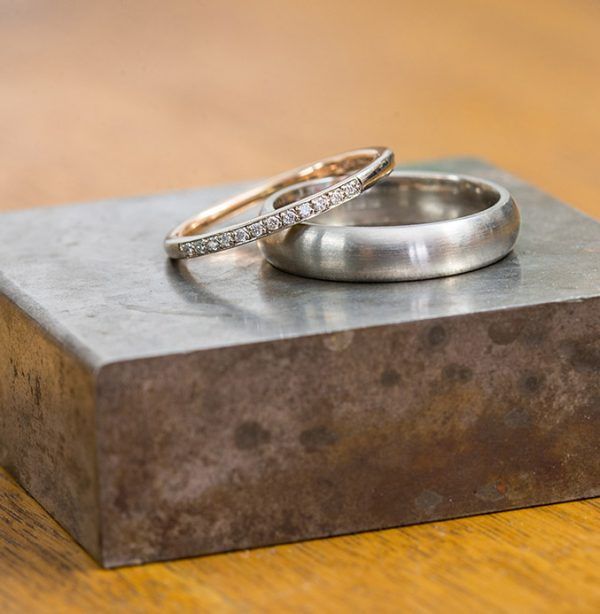
The two most common choices are white gold and platinum. They behave differently over time.

White gold:

  • slightly warmer tone under plating
  • requires occasional rhodium replating to maintain a bright white finish
  • generally lighter

Platinum:

  • naturally white, no plating required
  • develops a soft grey patina rather than losing material
  • heavier feel on the hand

Neither is objectively better. It depends on whether you prefer lower maintenance or a specific look and feel.

Matching doesn’t have to mean identical

Many couples assume their rings need to match exactly.

In practice, the most successful pairings share a connection rather than a duplicate design.

This could be:

  • the same metal
  • a similar texture
  • a shared detail in the finish

But the width, profile, or overall shape can differ to suit each person.

This creates a sense of unity without compromise.

Choose something that feels like you

There is a quiet difference between a ring that looks good, and a ring that feels right.
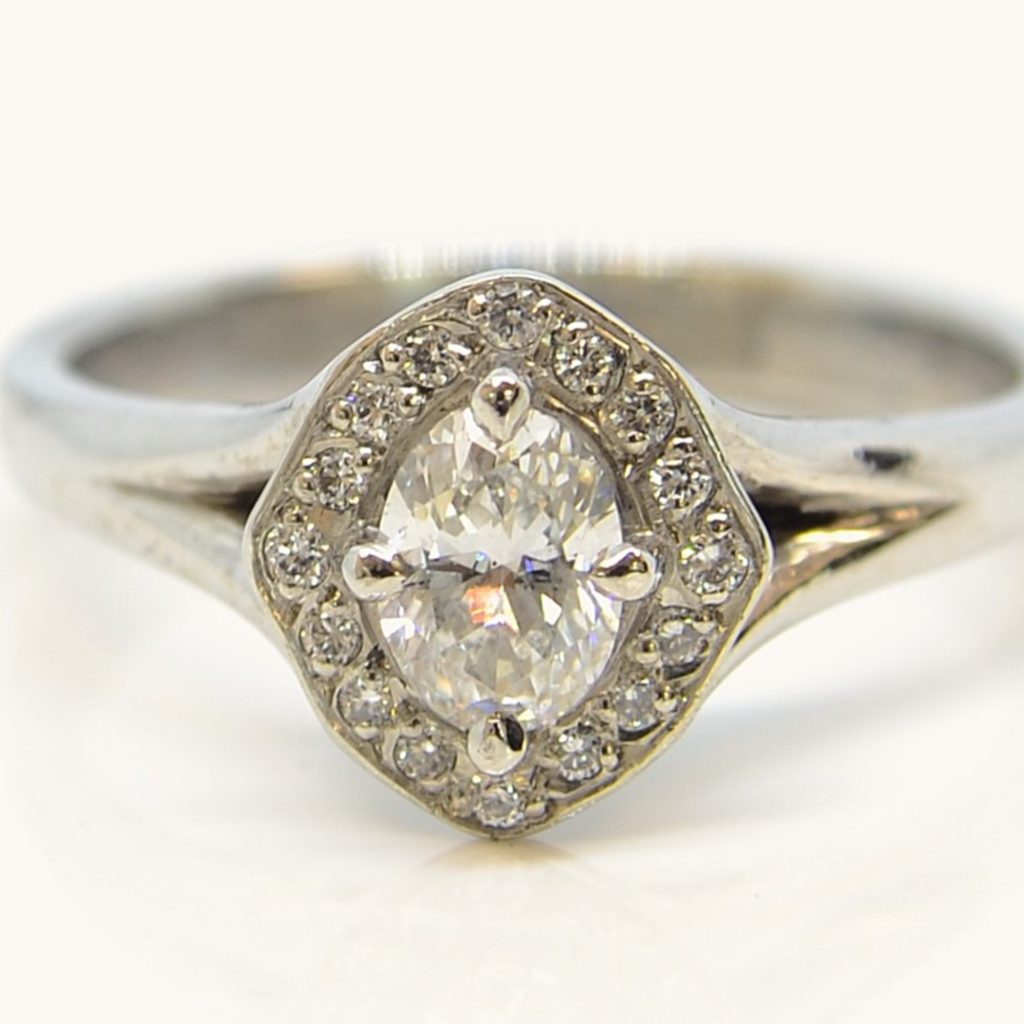
The latter is harder to define, but easier to live with.

It usually comes down to:

  • proportion that suits your hand
  • a finish that aligns with your style
  • a weight that feels natural

If you find yourself overthinking it, you may be looking too far outward.

The right ring tends to feel resolved.

A final thought

A wedding ring is not just chosen once.

It is worn, marked, and lived with over time.

The goal is not perfection on day one. It is choosing something that will settle into your life and continue to feel like yours.


Explore our wedding rings

If you are at the stage of exploring options, you can view our current collection here: Shop Wedding Rings

Or, if you are looking for something more personal, we offer a small number of bespoke commissions each month. Enquire About a Bespoke Ring

Birthstones and Meaning

A simple way to carry something personal

Jewellery has always been more than decoration. Long before trends or occasions, it was used to mark identity, protection and memory.

Birthstones sit quietly within that tradition.

They offer a simple way to choose something that already carries meaning. Not something assigned by fashion, but something connected to time, place or person.

Pieces like the Frum charm are designed with this in mind. Simple forms, with the option to add a stone that carries personal meaning

View the Frum charm →

For some, that’s their own birth month.
For others, it’s someone they want to keep close.

There’s no strict rule. Only what feels relevant.

The idea behind birthstones

Each month has long been associated with a specific gemstone. Different cultures have shaped slightly different lists over time, but the intention remains consistent.

A way to mark time.
A way to personalise something otherwise simple.
A way to give a piece of jewellery a starting point.

What matters isn’t whether the meaning is universally agreed. It’s whether it holds something for you.

Birthstones by month

A simple guide to the traditional birthstones and the ideas often connected to them

January – Garnet
Often linked with protection and grounding. A stone associated with strength through difficult periods

February – Amethyst
Clarity and calm. Traditionally connected with balance of mind and emotion

March – Aquamarine
A quieter stone. Associated with clarity, movement and a sense of ease

April – White Topaz (Diamond alternative)
Instead of diamond, we use stones that offer clarity and light without the same cost or formality

May – Green Tourmaline (Emerald alternative)
Rather than emerald, we work with stones that carry the same sense of growth and natural energy

June – Moonstone
Softness and intuition. Less defined, more reflective

July – Ruby
Energy and intensity. A stone that tends to carry presence

August – Peridot
Freshness and change. Often associated with lightness and forward movement

September – Sapphire
Focus and integrity. Traditionally linked with wisdom and clarity of thought

October – Pink Tourmaline
Variation and individuality. No two stones quite the same

November – Citrine
Warmth and optimism. A more subtle, steady kind of energy

December – Blue Topaz
Connection and protection. Often linked with travel and guidance

Explore birthstone options →

If you’re interested in how different stones are traditionally understood, you can read more in the gemstone guide →

Choosing a birthstone

The obvious approach is to choose your own.

But that’s not always the most meaningful.

Many people choose a stone for someone else

  • A child
  • A partner
  • A parent
  • Someone no longer here

Or even a moment. A specific time they want to hold onto.

There’s also no reason to stay within the traditional list. If a stone feels right, that matters more than whether it matches a chart.

Not every stone translates well into every design.
Some are too soft, too costly, or don’t wear well over time.

The Frum charm uses this same approach. A simple silver form, with the option to add a stone that holds personal meaning

View the Frum charm →


Jewellery as a marker

A birthstone doesn’t need to be the centre of attention.

In many cases, it works best when it’s subtle. Something you notice more than anyone else.

A small detail that carries weight without needing to explain itself.

This is where pieces like the Frum charm sit naturally.
Simple forms, with the option to add a stone that means something specific.

Not overly designed. Not overstated.
Just enough to hold meaning.

A quieter kind of gift

Birthstones are often given, rather than chosen.

They work well because they feel considered without being complicated. There’s already a story attached, even before the piece is made.

That makes them useful for moments that matter, but don’t need to be loud
Birthdays
New arrivals
Marking a year
Remembering someone

The value isn’t in the material alone. It’s in what it stands for.

Most jewellery becomes part of a routine.

Put on in the morning. Taken off at night. Worn without much thought.

But the pieces people keep tend to have something behind them.

A reason they were chosen.
A time they were given.
A person they relate to.

Birthstones offer a simple way to begin that process.