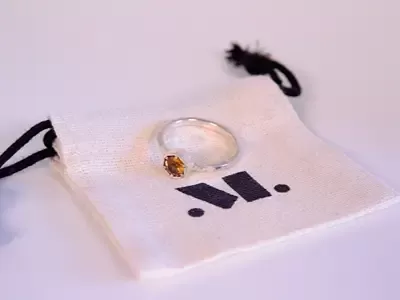
The best alternatives to diamonds when choosing a stone for your wedding or engagement ring

Best Alternative Gemstones for Engagement and Wedding Rings

Diamonds are a classic choice for engagement or wedding rings, but they are far from the only option. Many couples today are drawn to alternative gemstones that offer colour, character, and deeper personal meaning, while still standing up to daily wear.

When choosing a gemstone for a ring you’ll wear every day, durability matters. Stones with higher hardness on the Mohs scale resist scratching and abrasion, helping your ring retain its beauty for decades.

Here’s a practical guide to the best alternative gemstones for engagement and wedding rings, and how to choose the right one for you.

Why Choose Diamond Alternatives for Engagement Rings?

Alternative gemstones allow couples to:

  • Express individuality through colour and distinctive design
  • Select stones with personal or symbolic meaning
  • Create a ring that feels intentional rather than conventional

Many gemstones offer excellent durability, making them well suited to engagement and wedding rings when properly set.

What Makes a Good Engagement Ring Gemstone?

When choosing a gemstone for an engagement or wedding ring, consider three key factors:

1. Durability

For daily wear, gemstones ideally fall above 7.5 on the Mohs hardness scale. These stones resist scratching and maintain polish over time.

Excellent choices include:

  • Sapphire
  • Ruby
  • Tsavorite garnet
  • Spinel
  • Alexandrite

These stones combine beauty with practical longevity.

2. Colour and Visual Character

Alternative gemstones open up a wide spectrum of colour:

  • Deep greens, vivid blues, rich reds, soft pastels, and inky dark tones
  • Subtle or saturated depending on your preference

Your metal choice influences the final look:

  • White gold and platinum complement cooler hues (blue sapphire, spinel, alexandrite)
  • Yellow and rose gold enhance warm tones (ruby, tsavorite, champagne sapphire)

3. Meaning and Symbolism

Many couples choose stones for their associations:

  • Sapphire: loyalty, wisdom, and lasting love
  • Ruby: passion, strength, and devotion
  • Tsavorite: growth, vitality, and prosperity
  • Spinel: renewal and resilience

Meaning can be personal rather than traditional. The most important factor is choosing a stone that resonates with you.

Best Diamond Alternatives for Engagement Rings

Sapphire

One of the most durable gemstones after diamond. Available in blue, green, yellow, pink, peach, and parti-colours. A timeless yet versatile choice.

Ruby

A variety of corundum (like sapphire) with exceptional hardness and a rich red colour. Ideal for those wanting a bold, romantic statement.

Tsavorite Garnet

Vivid green with excellent brilliance and strong durability. A striking alternative to emerald, but far tougher for everyday wear.

Spinel

Often overlooked, spinel comes in blues, greys, reds, pinks, and black. Hard, bright, and well suited to engagement rings.

Salt and Pepper Diamonds

Natural diamonds containing visible inclusions that create a smoky, speckled appearance. They offer the same durability as traditional diamonds, with a more organic, unconventional aesthetic.

Stones Better Suited for Accent Use

Softer gemstones such as quartz varieties (amethyst, citrine, rose quartz), turquoise, or malachite can be beautiful, but are more vulnerable to scratching. These stones work best as:

  • Accent stones
  • Occasional-wear rings
  • Heavily protected bezel or halo settings

For centre stones in engagement rings, higher-hardness gems are the safer choice.

Engagement Ring Design Approaches

When exploring the best alternative stones for engagement rings, consider these design approaches:

  • Single-stone rings: Showcase a sapphire, ruby, spinel, or tsavorite for a clean, timeless look.
  • Gemstone centre with diamond accents: Coloured centre stone with small diamonds for added sparkle and durability.
  • Bezel-set gemstones: A protective metal rim around the stone, ideal for active lifestyles.

Good design and setting choice significantly extend a gemstone’s lifespan. Browse our selection of handmade rings for inspiration.

Gemstones in Wedding Bands

Wedding bands can incorporate gemstones subtly:

  • Small sapphires or rubies set flush into the band
  • Mixed gemstone and diamond accents
  • Alternating coloured stones for symbolic meaning

These details add individuality without sacrificing practicality.

Bespoke Engagement and Wedding Rings

For couples who want a truly unique ring, bespoke options are the perfect solution. Allowing you to choose the exact gemstone you love, select a setting and metal that suits your lifestyle, and create something truly one of a kind.

At The Middle Green, we specialise in creating bespoke engagement and wedding rings using both traditional diamonds and carefully selected alternative gemstones.

Book your consultation to design a ring that reflects your story and will last a lifetime.
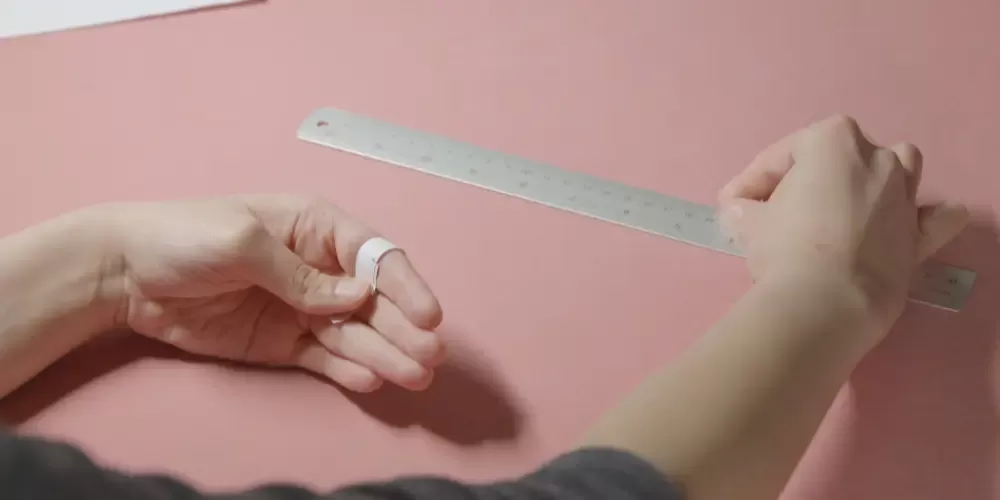
UK Ring Size Guide - how to find out your ring size

Ring Size Guide

UK Ring Size Guide

Whether you are shopping for an engagement ring, wedding ring, or a ring for yourself; understanding ring sizes is essential to ensuring your new piece of jewellery fits properly.

A poorly fitted ring can be uncomfortable to wear if it’s too tight, or be more likely to slip off if it’s too loose, which could result in the ring being lost.

To help ensure your new ring is the perfect size, our expert jewellers at The Middle Green have created a UK ring size guide.

Ring Sizing Chart UK

In the UK, ring sizes range from A to Z. These sizes are based on the inside diameter and the circumference of the ring, measured in mm.

Ring Size Diameter (mm) Circumference (mm) Find Rings
A 12.04 37.8 Size A Rings
B 12.45 39.1 Size B Rings
C 12.85 40.4 Size C Rings
D 13.26 41.7 Size D Rings
E 13.67 41.7 Size E Rings
F 14.07 44.2 Size F Rings
G 14.48 45.5 Size G Rings
H 14.88 46.8 Size H Rings
I 15.29 48 Size I Rings
J 15.49 48.7 Size J Rings
K 15.9 50 Size K Rings
L 16.31 51.2 Size L Rings
M 16.71 52.5 Size M Rings
Ring Size Diameter (mm) Circumference (mm) Find Rings
N 17.12 53.8 Size N Rings
O 17.53 55.1 Size O Rings
P 17.93 56.3 Size P Rings
Q 18.34 57.6 Size Q Rings
R 18.75 58.9 Size R Rings
S 19.15 60.2 Size S Rings
T 19.56 61.4 Size T Rings
U 19.96 62.7 Size U Rings
V 20.37 64 Size V Rings
W 20.78 65.3 Size W Rings
X 21.18 66.6 Size X Rings
Y 21.59 67.8 Size Y Rings
Z 21.79 68.5 Size Z Rings

How to Measure Your Ring Size

Use these simple methods to get an accurate measurement of your ring size at home:
  • Use a Ring Sizer

    Ring sizing tools are widely available and low cost. These useful tools can help you determine the ring size for each of your fingers.
  • Use an Existing Ring

    If you have an existing ring, you can find out the size using the table above to ensure you purchase the correct size.
  • Use a DIY Measurement Tool

    Using a piece of string or tailors’ tape can help you determine the circumference of your finger which can be converted into a ring size using the table above.

Tips for Measuring Your Ring Finger

Follow our top tips to ensure that you get the most accurate measurement of your ring finger:
  • Find the average

    Your finger size can change throughout the day. Be sure to take several measurements to work out an average. 

  • Cold weather

    Cold weather makes your fingers smaller, so avoid measuring your fingers when cold. 

  • Pick the right finger

    Typically ring sizes differ between hands, so measure the exact finger you plan to wear the ring on.  

  • Large joints

    If you have larger finger joints, take this into account when measuring. You may need to choose a slightly larger size to ensure the ring can fit over your joints. 

How To Find Your Partner’s Ring Size

If you want to secretly find your partner’s ring size to surprise them with a gift or a proposal, try these tips:
  • Use Existing Ring

    Measuring an existing ring that your partner has can give you an accurate size; just ensure they wear the ring of their wedding finger if you’re planning to propose!

  • Use Your Own Ring Size

    Measuring your own ring size and trying your partner’s rings on can help you figure out what size ring they are.

  • Consider a Promise Ring

    If you want to ensure the fit is perfect, consider gifting your partner a promise ring before getting their exact measurements for the wedding ring. 

FAQs

  • Can rings be made bigger or smaller?

    If you do purchase a ring that is the wrong size, it can be possible to adjust the size to make it bigger or smaller. However, this will be dependent on the material and design of the ring.

  • Are ring sizes different for men and women?

    While women often wear smaller ring sizes, the ring sizing system is unisex and does not differ between men and women

  • Can you get half sizes in rings?

    Yes. Whilst most jewellers offer sizes ranging from A-Z, it is possible to get rings in half sizes. When choosing a bespoke ring, it will be made to your exact size for a perfect fit every time.

  • Do UK ring sizes differ from international sizes?

    Yes, UK rings are sized using an alphabetical scale, in contrast to European sizing which uses a numerical scale based on circumference and U.S. and Canadian sizes, which use a numerical scale with half and quarter sizes.

Find the Perfect Fit with The Middle Green

Ready to find your perfect ring? At The Middle Green, we offer a curated collection of handmade rings including engagement rings, wedding rings, diamond rings, couples sets and so much more.

Explore our range of stunning rings suitable for any style and occasion now, all available to purchase online exclusively from our online shop.

Shop Now

Continue reading