
Ring Restoration and Rebuilding in Swindon

Worn, damaged and inherited rings carefully assessed by Tom McDanielson, an experienced goldsmith based in Swindon

Where a straightforward repair is no longer enough, Tom can restore worn areas, rebuild part of the ring or explain when remodelling would provide a stronger long-term result

Repair, Rebuild or Remodel?

Repair

Suitable where the damage is localised and the original structure remains sound.

Examples include:

A small crack

A damaged join

Minor distortion

Localised wear

A single weakened area

Rebuild

Used where part of the ring, such as a thin shank, worn shoulder or damaged setting, needs replacing while retaining the wider design.

Examples include:

Replacing a worn shank

Rebuilding shoulders

Restoring worn setting walls

Reconstructing part of the band

Strengthening a weakened structure

Remodel

Recommended where the jewellery is too worn, unsuitable or compromised to restore reliably, or where the owner wants to reuse the materials in a new design.

Remodelling may be recommended where:

The ring is too worn for a dependable restoration

Several areas have failed

The design is no longer suitable

The customer wants to reuse the stones or metal in a new piece

The cost of repeated repair no longer makes sense

Considering a completely new design? Explore Jewellery Remodelling

Give a Worn ring a Reliable Future

Over time, rings can become thin, distorted, cracked or unstable. Settings wear down, shanks lose strength and previous repairs can begin to fail.

In many cases, the ring does not need to be completely remade. Worn sections can be rebuilt, damaged areas replaced and the original design retained.

Tom will assess the ring properly before recommending work. The aim is to preserve what matters while creating a result that is strong enough to wear with confidence.

How ring Restoration Works

The Process

Step 1: Send photographs

Send clear photographs of the ring from several angles, including close-ups of worn or damaged areas.

Step 2: Receive initial advice

Tom will provide an initial view of the likely options and whether repair, rebuilding or remodelling may be most appropriate.

Step 3: Arrange an appointment

Bring the ring to the Swindon workshop by appointment for closer inspection.

Step 4: Review the options

Tom will explain what can be retained, what needs replacing and the likely long-term result of each option.

Step 5: Approve the fixed quote

No work begins until you have approved the agreed approach and fixed quote.

Step 6: Restore and refinish

The ring is repaired or rebuilt, checked and refinished before collection.
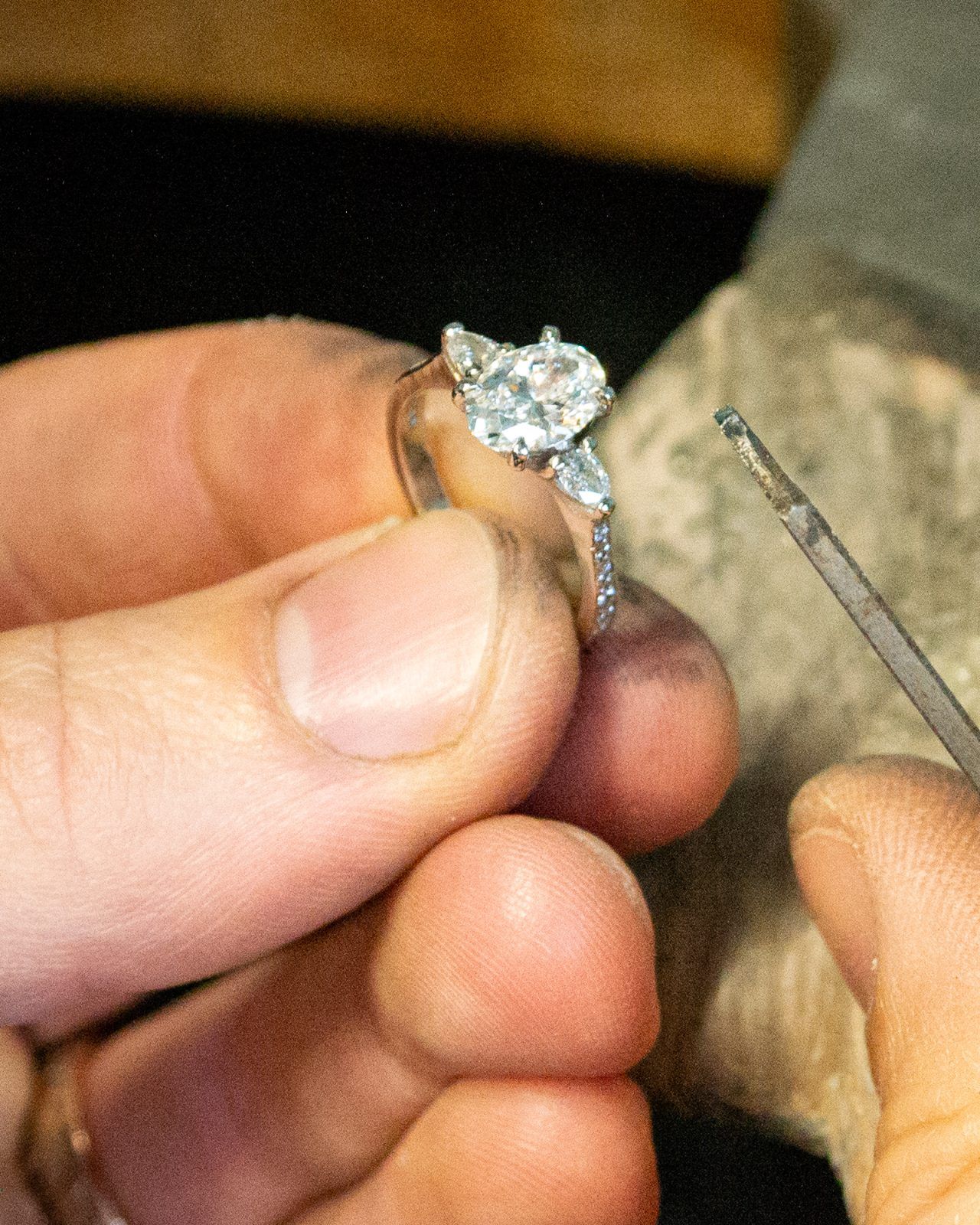
Close up of a goldsmith hand finishing a diamond engagement ring at the bench in a Wiltshire workshop, filing the setting in recycled precious metal

Pricing

Ring Restoration Prices

Ring restoration and rebuilding are quoted after assessment.

The final cost depends on:

The metal

The amount of structural work required

The condition of the shank and setting

Whether new metal is needed

The number and type of stones

Whether stones need removing and resetting

The complexity of the original design

Previous repairs

The level of refinishing required

The minimum workshop charge is £75.

Straightforward local repairs may begin from around £100, while partial rebuilding and more involved restoration work will cost more.

You will receive a fixed quote before any work begins.

Restoring Thin and Worn Ring Shanks

The underside of a ring often wears faster than the rest of the piece. Over time, the shank can become thin, sharp, distorted or vulnerable to cracking.

Where enough sound metal remains, the worn area may be reinforced or replaced.

For more advanced wear, a new section of shank can be fitted while retaining the original setting and upper part of the ring.

Tom will assess whether a local repair is sufficient or whether replacing a larger section would provide a better long-term result.

Rebuilding Worn Settings and Shoulders

The shoulders and settings of engagement rings often carry significant stress.

Wear can cause: thinning around the stones, cracks near the setting, distortion, loose stones, weak joins or loss of symmetry

Where the setting remains largely sound, worn areas may be rebuilt. Where the structure has become too compromised, a new setting or partial reconstruction may be needed.

The goal is to secure the stones without making unnecessary changes to the appearance of the ring.

Inherited and Sentimental Rings

Inherited rings often carry more value than their materials alone.

Tom will aim to retain the original character, proportions and visible history of the ring wherever practical.

Heavy polishing or unnecessary alteration can erase detail and patina. Restoration should therefore be proportionate to the condition of the piece and how it will be worn.

Where an older ring needs significant work, Tom will explain what can be preserved and where compromise may be necessary.

When Earlier Repairs Begin to Fail

Older rings may contain several previous joins, patches or additions.

These repairs can sometimes remain reliable for years, but repeated work may eventually weaken the surrounding metal or make further local repair impractical.

Tom will inspect the full structure rather than simply repairing the latest visible fault.

Where another small repair would only delay a wider failure, partial rebuilding may be the more sensible option.

Not Every Ring Should Be Restored

Restoration is worthwhile when it gives the ring a secure and useful future.

It is not always sensible where:

The metal is heavily depleted

Several areas are failing

The setting is too weak

The ring has been repaired repeatedly

The cost approaches that of a stronger remake

The original design cannot support safe daily wear

In these cases, remodelling may offer a better long-term result while preserving the stones, metal or sentimental meaning of the original.

Tom will explain the practical difference between the options before recommending any work.

FAQ

Can any ring be restored?

No. Many rings can be repaired or rebuilt, but heavily worn or badly compromised pieces may be better suited to remodelling.

What is the difference between repair and restoration?

A repair addresses a specific fault. Restoration looks at the wider condition of the ring and may involve rebuilding several worn areas.

Can you replace a thin ring shank?

Yes, in many cases. The worn section can often be replaced while retaining the original upper part of the ring.

Can you restore an inherited ring?

Yes, provided the structure and materials allow it. The aim is to preserve the original character while making the ring safe to wear.

Will the restored section be visible?

A well-executed restoration should blend into the original ring, but the result depends on the metal, finish, age and existing condition.

Can you use the original stones?

Usually, yes, provided they are suitable for resetting and remain in good condition.

What happens if the ring is too worn to repair?

Tom will explain whether partial rebuilding, a new setting or full remodelling would provide a better result.

How much does ring restoration cost?

It depends on the amount of work required. Local repairs may begin from around £100. More extensive rebuilding is quoted after assessment.

How long does restoration take?

Most restoration work takes between two and six weeks, depending on complexity and whether stones need sourcing or resetting.

Can you restore a ring bought elsewhere?

Yes. The ring does not need to have been made by The Middle Green.

Do I need an appointment?

Yes. All consultations are by appointment only.

Does Your Ring Need More Than a Simple Repair?

Send clear photographs for an initial assessment, or arrange an appointment with Tom at the Swindon workshop.

You will receive straightforward advice on whether repair, rebuilding or remodelling offers the best long-term result.