Sapphire Colours Explained: Beyond the Classic Blue Sapphire
When most people think of sapphire, they picture a deep blue stone. It is the colour sapphire has become known for, but it represents only a small part of what this gemstone can offer.
Sapphires occur naturally in an unusually broad range of colours, from subtle greens and warm yellows through to teal, pink, white and stones containing several colours at once.
For me, that variety is one of the things that makes sapphire particularly interesting when designing bespoke jewellery. Changing the colour of the stone can completely change the character of a ring, while retaining the durability that makes sapphire such a practical choice for jewellery worn every day.
Are all sapphires blue?
No. Sapphire and ruby are both varieties of the mineral corundum. Red corundum is generally classified as ruby, while sapphires occur in blue and a wide range of other colours, often referred to collectively as fancy sapphires.
These can include:
- green
- yellow
- teal and blue-green
- pink
- purple
- orange
- near-colourless or white
- combinations of several colours within a single stone
Sapphire also ranks 9 on the Mohs scale of hardness and has excellent toughness, which is one reason I regularly recommend it for engagement rings and other pieces intended to be worn frequently.
Green sapphires
Green sapphires can range from pale, slightly grey greens through mossy and olive tones to much deeper blue-green stones.
I particularly like the less saturated examples. They often have a quieter, more natural appearance than the intense colour associated with traditional blue sapphire.
Enquire about this green sapphire engagement ring
Green also works particularly well with yellow gold. The warmth of the metal can bring out the earthy tones within the stone without overwhelming it.
For someone looking for an engagement ring that feels distinctly different without being overly colourful, green sapphire is one of the first options I would consider.
Sapphire Colours Explained: Beyond the Classic Blue Sapphire
Yellow sapphires
Yellow sapphires range from light lemon shades through to rich golden yellows.
Set into yellow gold, they can create a particularly warm overall appearance because the colour of the stone and metal work together rather than strongly contrasting.
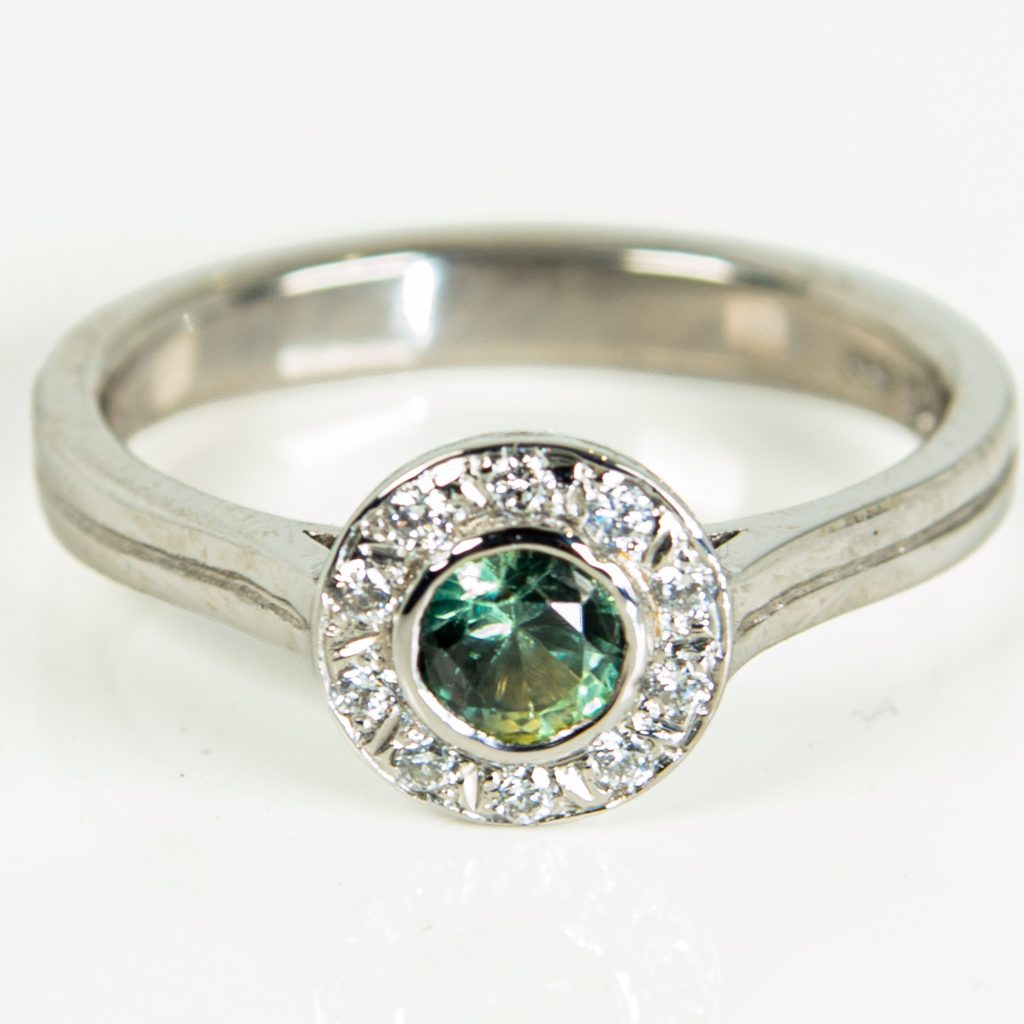
The recently completed ring shown here uses green and yellow sapphire together. Rather than choosing stones that match perfectly, the variation in colour is part of what gives the finished ring its character.
This is also one of the advantages of choosing individual natural gemstones for a bespoke piece. The starting point can be the stones themselves rather than trying to force them into a predetermined design.
Teal sapphires
Teal sapphires sit somewhere between blue and green, although there is an enormous amount of variation within the category.
Some are predominantly blue with just a hint of green, while others can appear distinctly green in one type of light and more blue in another.
They have become an interesting alternative to traditional blue sapphire because they retain some of its familiarity while feeling much less conventional.
The exact colour is particularly important with teal sapphires, so I prefer choosing them as individual stones rather than simply specifying “teal” and expecting every sapphire to look alike.
Pink sapphires
Pink sapphire can range from very pale blush tones to intense, vivid pink.
They offer much of the durability of blue sapphire while producing a completely different effect in a finished ring.
Paler stones can be surprisingly understated, particularly when paired with white metal, while stronger pinks naturally become much more of a focal point.
As with all coloured gemstones, photographs can only tell part of the story. Saturation, brightness and subtle secondary colours can make two apparently similar pink sapphires feel very different in person.
White sapphires
White sapphire is essentially sapphire with very little visible colour.
It is sometimes considered as an alternative to diamond, although I think it is better viewed as a gemstone in its own right.
Diamond and sapphire interact with light differently, so a white sapphire will not simply look like a less expensive diamond. Its appearance is generally softer and less fiery.
For someone who actively prefers that quieter appearance, however, it can work beautifully.
Parti sapphires
Parti sapphires are some of the most individual stones available.
Rather than displaying one consistent colour, a parti sapphire contains distinct colour zones within the same gemstone. Green, blue and yellow combinations are particularly associated with them.
How those colours appear once the stone has been cut depends on the original crystal, the orientation of the colour zoning and the choices made by the cutter.
The result is that two parti sapphires are rarely identical.
For bespoke jewellery, that individuality can be a real advantage. Instead of choosing a gemstone because it conforms to a conventional idea of perfection, the unusual distribution of colour can become part of the design.
What affects the colour of a sapphire?
Sapphire colour comes from trace elements present within the corundum crystal as it forms.
But the chemistry of the stone is only part of what you eventually see.
The appearance of a sapphire can also be affected by:
- its depth of colour
- saturation
- the way it has been cut
- colour zoning within the crystal
- the type of light in which it is viewed
- the surrounding metal and other gemstones
This is why I place considerably more importance on looking at the individual stone than simply working from a description on a gemstone certificate or supplier’s listing.
A sapphire described as “green”, for example, could be pale sage, olive, blue-green or so dark that it appears almost black in some lighting.
Choosing sapphire for an engagement ring
Sapphire is particularly well suited to engagement rings because it combines colour with very good durability.
But there is no single sapphire colour that works best.
When I am sourcing a stone for a bespoke ring, I am usually considering several things at once:
- the colours the wearer naturally gravitates towards
- how subtle or prominent they want the stone to feel
- the shape and proportions of the gemstone
- the metal the ring will be made from
- the design of the setting
- whether other gemstones will sit alongside it
- budget
- how the finished ring needs to withstand everyday wear
Sometimes the right stone is an intense blue sapphire. At other times it might be an imperfect green, a warm yellow or a parti sapphire with an unusual area of colour running directly through the centre.
There is far more freedom than the traditional image of a blue sapphire engagement ring might suggest.
Choosing the stone before designing the ring
With unusual sapphires, I often prefer to let the gemstone influence the design rather than beginning with a completely fixed idea of what the finished ring must look like.
An unusual shape, colour transition or natural characteristic within a sapphire can become something to work with rather than something that needs hiding.
That is particularly relevant to bespoke jewellery.
Instead of finding a stone that approximately fits an existing ring design, the proportions of the setting can be developed specifically around the individual gemstone.
The result tends to feel much more resolved because the stone and ring were considered together from the beginning.
Beyond blue
Classic blue sapphire deserves its reputation, but it is only one possibility.
Green, yellow, teal, pink and parti sapphires offer a much broader palette, particularly for people who want an engagement ring or piece of jewellery that feels personal without relying on an obviously unconventional design.
For me, the attraction is not simply that these sapphires are different.
It is that no two natural stones need to be treated in exactly the same way.
If you are considering a sapphire for a bespoke engagement ring, I can source individual stones in different colours, shapes and budgets before designing the ring around the one that feels right.

Rings
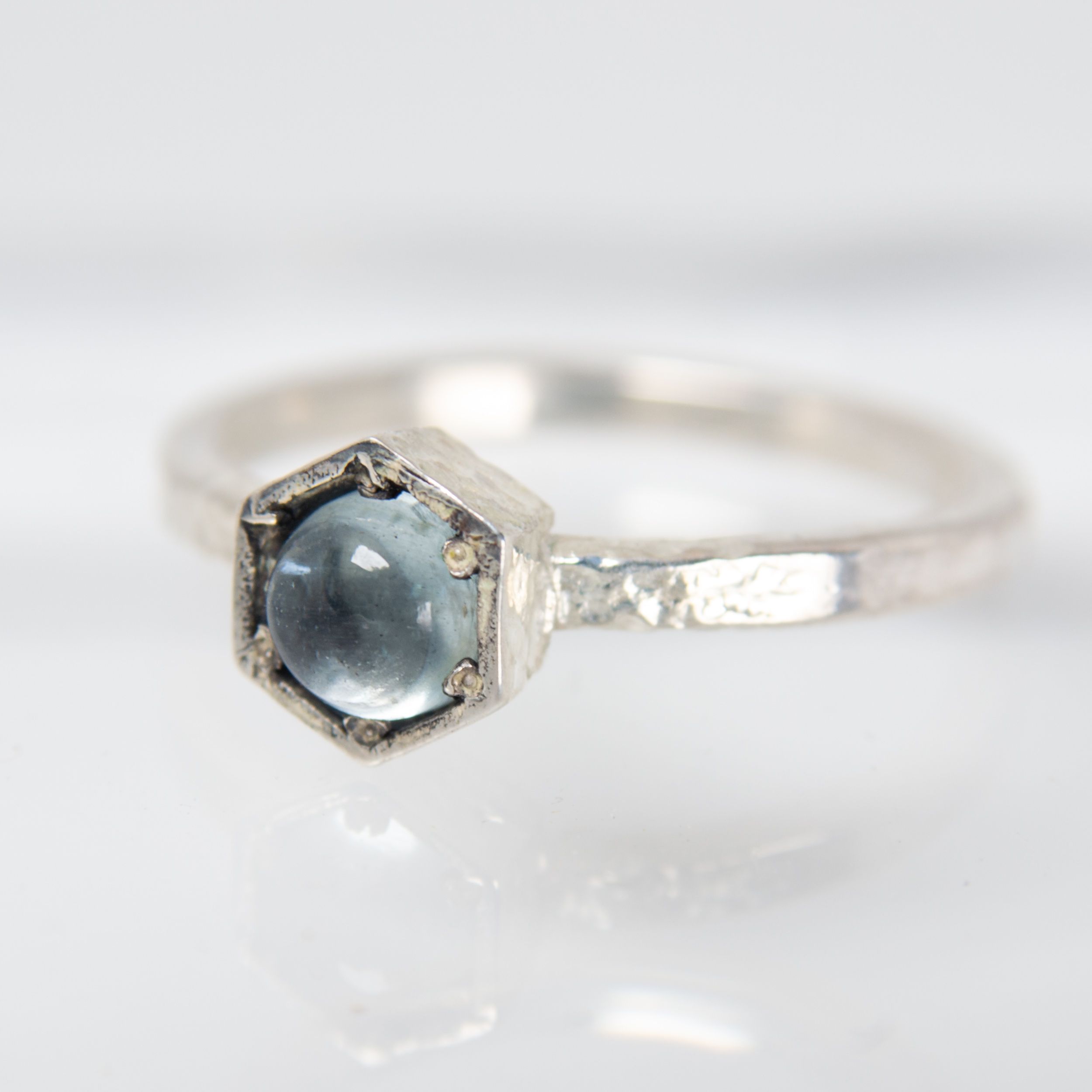
Symbolic rings in gold and silver, with or without gemstones. Crafted for daily wear, comfort and longevity