Rhodium Plating and White Gold Re-finishing in Swindon
Professional white gold re-finishing and rhodium plating carried out personally by Tom McDanielson, an experienced goldsmith based in Swindon
If your white gold jewellery has become dull, yellowed or uneven in colour, Tom will assess the piece, refinish the surface and explain whether rhodium plating is appropriate before any work begins
White gold jewellery is often finished with a thin layer of rhodium to create a brighter, whiter and more reflective surface.
Over time, that surface gradually wears away, especially on rings that are worn every day. This can leave the jewellery looking warmer in colour, duller or uneven around the band and setting.
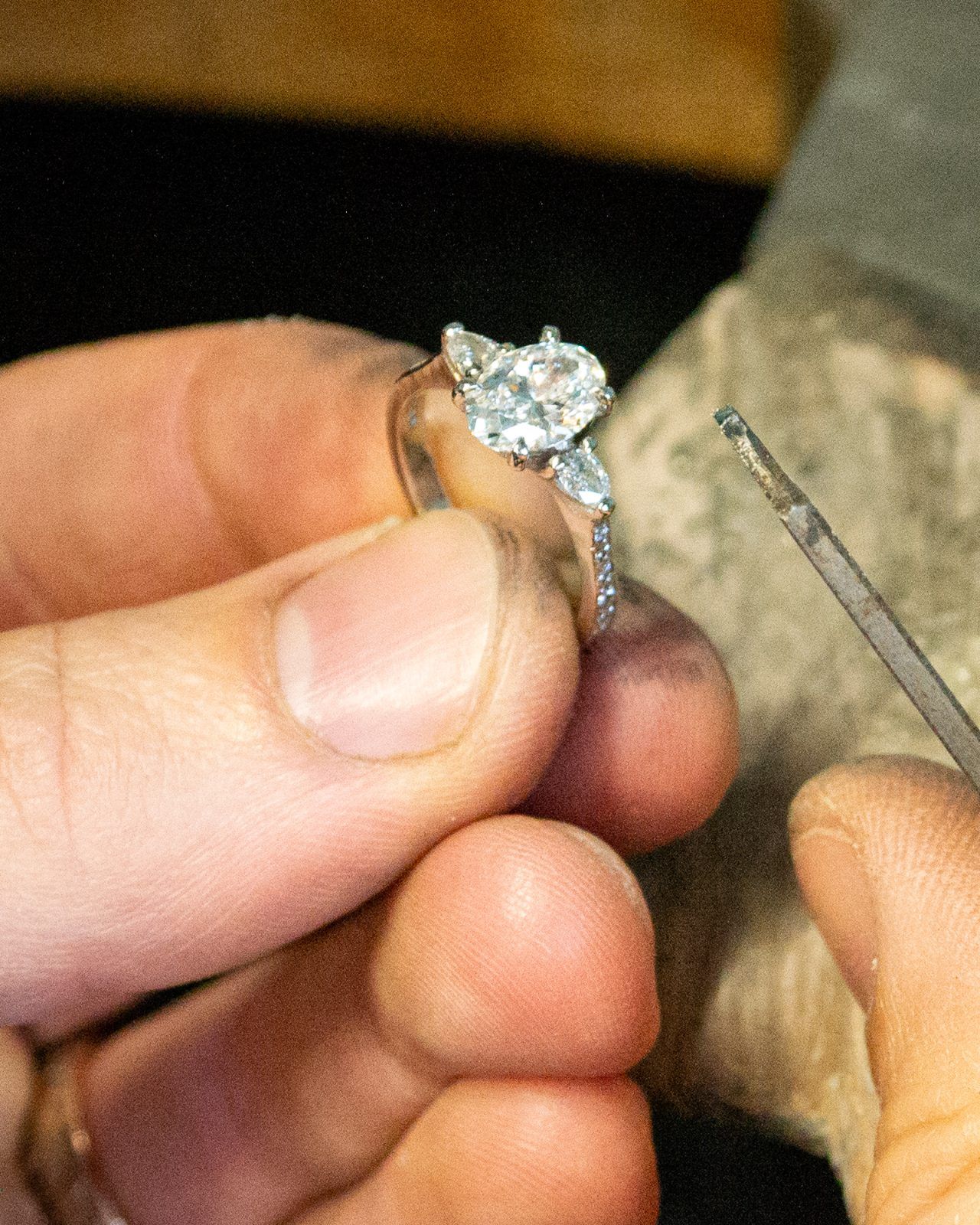
Rhodium plating can restore a brighter appearance, but the jewellery must first be cleaned, inspected and properly refinished. Plating over scratches, dirt or worn settings will not produce a good long-term result.
What can be rhodium plated?
Jewellery We Commonly Re-finish
White gold engagement rings
White gold wedding bands
Stone-set rings
Pendants
Earrings
White gold chains and bracelets
Jewellery showing yellowing or uneven colour
Jewellery requiring refinishing after repair work
Most solid white gold jewellery can be refinished and rhodium plated.
The final result depends on the construction, condition and existing finish of the piece. Jewellery with delicate gemstones, worn settings or mixed-metal details may need a more cautious approach.
What the service includes
More Than Simply Replating
Inspection
The jewellery is checked for visible wear, loose stones, damaged claws and weakened areas before refinishing begins.
Professional cleaning
Dirt, oils and polishing residue are removed from the surface and around the settings.
Surface refinishing
Scratches and dullness are reduced where appropriate, and the existing polish or satin finish is restored.
Rhodium plating
A fresh rhodium finish is applied to create a brighter, more even white surface.
Final inspection
The piece is checked again before collection.
How Rhodium Plating Works
The Process
Step 1: Send photographs
Send clear photographs of the jewellery, including close-ups of the worn or yellowed areas.
Step 2: Receive initial advice
Tom will give an initial view of whether rhodium plating is suitable and the likely price range.
Step 3: Arrange an appointment
Bring the jewellery to the Swindon workshop by appointment so it can be inspected properly.
Step 4: Approve the fixed quote
No work begins until you have received and approved a fixed quote.
Step 5: Clean, refinish and plate
The jewellery is cleaned, refinished and rhodium plated before a final inspection.
Pricing
Rhodium Plating Prices
White gold re-finishing and rhodium plating starts from £85.
You will receive a fixed quote before any work begins.
Why white gold changes colour
Why Does White Gold Start to Look Yellow?
White gold is made by combining gold with other metals to create a paler alloy. The natural colour of white gold is usually warmer and greyer than the bright white appearance associated with freshly plated jewellery.
Rhodium plating creates that brighter outer surface. As the coating wears through, the underlying white gold becomes more visible.
This is normal wear rather than a fault with the jewellery.
How quickly it happens depends on:
How often the piece is worn
Skin contact
Friction
Cleaning products
Hand creams and chemicals
The thickness and quality of the previous plating
The design of the jewellery
How long does rhodium plating last?
There is no fixed interval.
A ring worn every day may begin to show wear within one to three years, while earrings or pendants may retain their finish for much longer.
Wear usually appears first:
Underneath the ring
Along the edges
Around the shoulders
On raised surfaces
In areas that regularly rub against other jewellery
Rhodium plating is a maintenance treatment rather than a permanent change to the metal.
When replating may not be sensible
Rhodium plating improves the surface appearance, but it cannot correct structural damage.
If the jewellery is heavily worn, cracked, distorted or has weakened settings, repair or restoration may be needed first.
Repeated heavy polishing can also remove unnecessary metal from thin jewellery. Tom will recommend the lightest level of refinishing needed to achieve a worthwhile result.
The priority is to improve the appearance without compromising the long-term strength of the piece.
This varies. Rings worn daily may need replating every one to three years, while less frequently worn jewellery may last much longer. It has been known to only last for six months and very much depends on the wearer.
Technically yes, but it is rarely the best long-term solution because the contrast becomes obvious as the plating wears. Tom will advise whether it is sensible for the piece.